Former South Carolina KKK museum to become a diversity center
Share
Explore Our Galleries









Breaking News!
Today's news and culture by Black and other reporters in the Black and mainstream media.
Ways to Support ABHM?
By Char Adams, NBC News
The Redneck Shop in Laurens, South Carolina, is finally being done away with for good. But the wounds from the Klan-run space are still fresh.
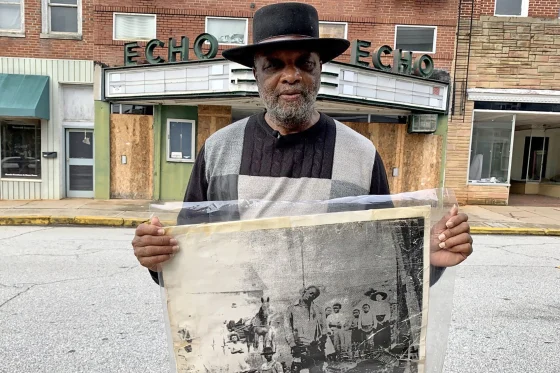
The Rev. David Kennedy remembers well what it was like growing up in Laurens, South Carolina, during the Jim Crow era. He lived in an apartment with his grandparents marked “C” for “colored” and was forced off sidewalks when white people would pass.
He recalls going into a shop one day as a kid to buy a collar for his dog, only to have an employee ask him, “Do you need one to fit your neck, too?” He tells the stories of Black people killed after being falsely accused of wrongdoing — including his great-great uncle Richard Puckett…
Laurens, a city of 9,300 whose population is 56 percent white and 38 percent Black, has a history rife with racism and oppression for its Black population. Along with the daily discrimination residents like Kennedy faced, racist murders were common in the area. Black men were lynched and killed for false rape accusations to refusing to work on holidays.
So, while residents were outraged, it wasn’t entirely shocking when a self-professed Ku Klux Klan member, John Howard Jr., opened the Redneck Shop, a KKK museum, store and meeting place, in 1996 at an old segregated movie theater in the city…
The road to the Echo Project has been long and rough, and not everyone in the area supports the venture. Freeman chalks that up to critics’ simply not wanting to acknowledge Laurens’ history. Kennedy and Freeman say the new center will move Laurens to reckon with its history, and they have vowed to prioritize the stories of Black residents who endured the discrimination and violence, Freeman said.
Discover how Kennedy and the Echo Project are using the building to teach and encourage the community.
From sundown towns patrolled by racist citizens to lynch mobs, black Americans have always been concerned for their safety.
Check out our breaking news to learn how black Americans recognize their history and work toward their future.
Comments Are Welcome
Note: We moderate submissions in order to create a space for meaningful dialogue, a space where museum visitors – adults and youth –– can exchange informed, thoughtful, and relevant comments that add value to our exhibits.
Racial slurs, personal attacks, obscenity, profanity, and SHOUTING do not meet the above standard. Such comments are posted in the exhibit Hateful Speech. Commercial promotions, impersonations, and incoherent comments likewise fail to meet our goals, so will not be posted. Submissions longer than 120 words will be shortened.
See our full Comments Policy here.