Don’t fight with police, Detroit chief advises youth
Share
Explore Our Galleries









Breaking News!
Today's news and culture by Black and other reporters in the Black and mainstream media.
Ways to Support ABHM?
By Eric D. Lawrence, Detroit Free Press
Terrence Sherrer was skeptical.
The 15-year-old from Canton had just watched a group role-play a traffic stop.
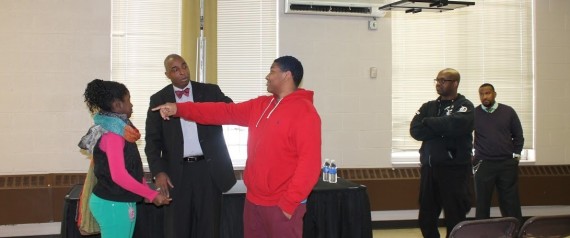
The Detroit officer seemed satisfied when he asked where the driver was headed. To the mall, he was told. Other questions got similar, brief responses, and the advice from the driver, retired Wayne County Sheriff’s Lt. Tyrone Carter, was that you have a right not to say a lot.
Terrence, who is black, said the encounter would probably be different if the officer was white and had stopped a car with three black people inside. In this case, the officer was black, too.
That conversation was part of a two-hour program organized by the B.A.L.L. (Bridging Athletic, Learning and Life Skills) Foundation held today in Detroit. It brought about 50 people, including officers from Detroit Police, parents and children to the East Campus of Triumph Church on East Grand Boulevard in Detroit.
Helping kids interact with police was the goal of the session. Don’t argue with the police, announce what you’re doing when you reach toward the glove compartment, or better yet, keep your license and registration in an overhead glasses compartment. Being able to tell your story if you are wronged during a traffic stop or any other interaction with the police is the key, according to Carter.
The event featured an address by Detroit Police Chief James Craig, who spoke about the journey that brought him to head the Detroit Police Department and the connection Detroit’s department has with the community.
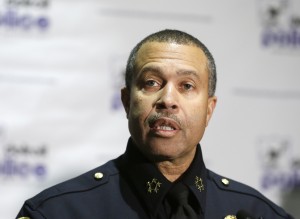
Craig encouraged the audience not to paint all police with the same brush. He said police officers are like any other group of people — most good and some bad.
Craig also passed on the advice his own father had given him: “Do not argue with the police. Do not fight with the police. Bad things happen.”
If an officer mistreats you or engages in an unethical traffic stop, report it, because there’s a process to deal with those situations, Craig said.
Read the full article here.
Read more Breaking News here.
Comments Are Welcome
Note: We moderate submissions in order to create a space for meaningful dialogue, a space where museum visitors – adults and youth –– can exchange informed, thoughtful, and relevant comments that add value to our exhibits.
Racial slurs, personal attacks, obscenity, profanity, and SHOUTING do not meet the above standard. Such comments are posted in the exhibit Hateful Speech. Commercial promotions, impersonations, and incoherent comments likewise fail to meet our goals, so will not be posted. Submissions longer than 120 words will be shortened.
See our full Comments Policy here.