‘Chicago’ star Angelica Ross’ history-making role kicks the door wide open for inclusion
Share
Explore Our Galleries





Breaking News!
Today's news and culture by Black and other reporters in the Black and mainstream media.
Ways to Support ABHM?
By Tat Bellamy-Walker, NBC News
Ross’ debut in one of Broadway’s longest-running shows is among various notable diverse castings, including “A Strange Loop” and the revival of “1776,” which features an all-women, nonbinary and trans ensemble.

In her final weeks on Broadway as headliner Roxie Hart in “Chicago,” Angelica Ross said she hopes audiences can see that trans identity goes beyond struggle and that there can be times of great light, too.
This fall, Ross made history as the first trans woman to ever play a leading role on Broadway.
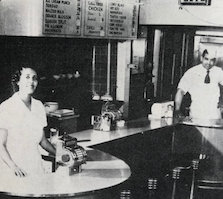
“There are moments to be had of joy and affirmation and creativity,” the star said in a Zoom interview from the Hollywood Diner in Manhattan, after finishing a vocal lesson nearby. “Being trans is not all about suffering and challenge,” she said, adding, “There’s still a determination, and there’s a certain determination within me … to break through and have this moment.”
Ross’ groundbreaking run, which began on Sept. 12, comes as other diverse castings have made waves both on and off-Broadway. Productions like the Tony Award-winning musical “A Strange Loop,” about a Black queer man’s struggle with identity; the revival of “1776,” centered on the signing of the Declaration of Independence and led by an all-woman, trans and nonbinary ensemble; and the Public Theater’s production of Lorraine Hansberry’s “A Raisin in the Sun,” about the struggles of a Black family in south Chicago, are just a few examples. Theater expert Terrance Jackson, who serves as the director of outreach at Barter Theatre in Abingdon, Virginia, says Ross’ Broadway debut indicates an era of growing diversity and inclusion on Broadway stages and in theaters across the country.
“The audiences are evolving,” said Jackson, who also runs Barter’s Black in Appalachia Initiative, which highlights the stories of local Black communities through theater. “For Broadway to survive, for regional theaters to survive, we need to cultivate a new audience.” He added that audiences today “want to see their stories on stage and they want to see themselves on stage.”
Classic tales such as Phantom of the Opera and The Little Mermaid have recently undergone melanistic makeovers.
Comments Are Welcome
Note: We moderate submissions in order to create a space for meaningful dialogue, a space where museum visitors – adults and youth –– can exchange informed, thoughtful, and relevant comments that add value to our exhibits.
Racial slurs, personal attacks, obscenity, profanity, and SHOUTING do not meet the above standard. Such comments are posted in the exhibit Hateful Speech. Commercial promotions, impersonations, and incoherent comments likewise fail to meet our goals, so will not be posted. Submissions longer than 120 words will be shortened.
See our full Comments Policy here.