Bank to pay $31M redlining settlement, DOJ’s largest ever
Share
Explore Our Galleries









Breaking News!
Today's news and culture by Black and other reporters in the Black and mainstream media.
Ways to Support ABHM?
By Ken Sweet, Associated Press
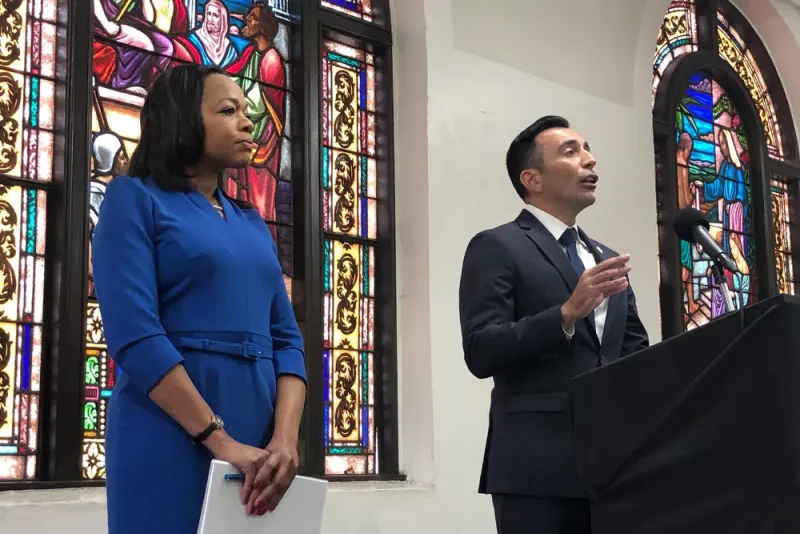
The Justice Department accused Los Angeles-based City National Bank on Thursday of discrimination by refusing to underwrite mortgages in predominately Black and Latino communities, requiring the bank to pay more than $31 million in the largest redlining settlement in department history.
City National is the latest bank in the past several years to be found systematically avoiding lending to racial and ethnic minorities, a practice that the Biden administration has set up its own task force to combat.
The Justice Department says that between 2017 and 2020, City National avoided marketing and underwriting mortgages in majority Black and Latino neighborhoods in Los Angeles County. Other banks operating in those neighborhoods received six times the number of mortgage applications that City National did, according to federal officials.
The Justice Department alleges City National, a bank with roughly $95 billion in assets, was so reluctant to operate in neighborhoods where most of the residents are people of color, the bank only opened one branch in those neighborhoods in the past 20 years. In comparison, the bank opened or acquired 11 branches in that time period. In addition, no employee was dedicated to underwriting mortgages at that one branch, unlike branches in majority white neighborhoods.
“This settlement should send a strong message to the financial industry that we expect lenders to serve all members of the community and that they will be held accountable when they fail to do so,” Assistant Attorney General Kristen Clarke, who leads the Justice Department’s civil rights division, said in a statement.
Redlining was coined during the 1960s, when the Civil Rights movement was going strong, to describe housing and property ownership discrimination.
ABHM’s breaking news archive includes more stories about racial inequality.
Comments Are Welcome
Note: We moderate submissions in order to create a space for meaningful dialogue, a space where museum visitors – adults and youth –– can exchange informed, thoughtful, and relevant comments that add value to our exhibits.
Racial slurs, personal attacks, obscenity, profanity, and SHOUTING do not meet the above standard. Such comments are posted in the exhibit Hateful Speech. Commercial promotions, impersonations, and incoherent comments likewise fail to meet our goals, so will not be posted. Submissions longer than 120 words will be shortened.
See our full Comments Policy here.