A look back at the March on Washington nearly 60 years later: in photos
Share
Explore Our Galleries









Breaking News!
Today's news and culture by Black and other reporters in the Black and mainstream media.
Ways to Support ABHM?
By Claretta Bellamy, NBC
The collection of archival photos is from the civil rights demonstration on Aug. 28, 1963, that brought more than 200,000 multiracial supporters to the National Mall in Washington.
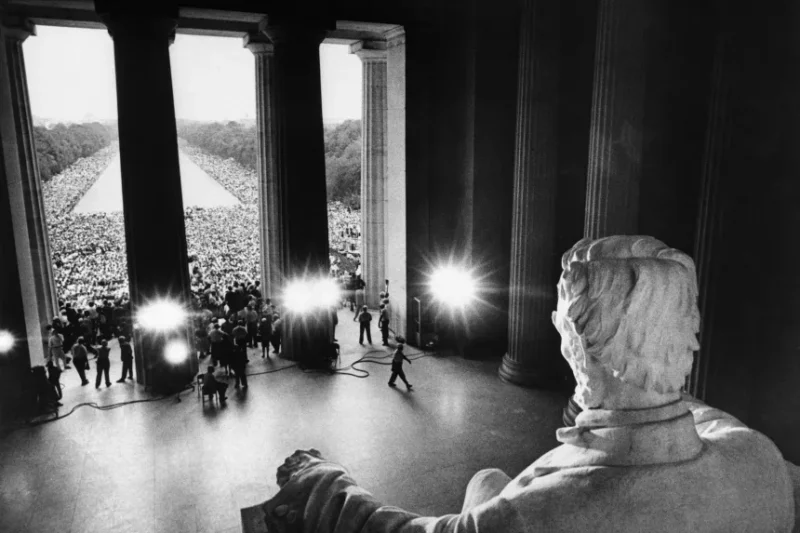
When Martin Luther King Jr. gave his iconic “I Have a Dream” speech 60 years ago, the moment became etched in the nation’s memory through his words and through photos of King waving to the crowd of at least 200,000 at the Lincoln Memorial in Washington — images that have been reprinted in history books for decades.
While most people today say King’s speech was the highlight of the march, it was only one of many historic moments during the nation’s largest civil rights demonstration at the time. People gathered from around the country and the world to express support for equal employment opportunities along with the civil freedoms of Black people and other marginalized communities.
Several prominent Black figures attended, including activist John Lewis, who later became a member of Congress, and the gospel singer Mahalia Jackson — who performed “I’ve Been ‘Buked, and I’ve Been Scorned” right before King took to the lectern.
The display of unity was a rare act of solidarity in an era when race itself was tearing the nation apart. Here’s a look back on this historic day through archival photos, all echoing the need for change.
Check out our exhibits about the Civil Rights movement that led to the original march.
Don’t forget to stop by our breaking news archive.
Comments Are Welcome
Note: We moderate submissions in order to create a space for meaningful dialogue, a space where museum visitors – adults and youth –– can exchange informed, thoughtful, and relevant comments that add value to our exhibits.
Racial slurs, personal attacks, obscenity, profanity, and SHOUTING do not meet the above standard. Such comments are posted in the exhibit Hateful Speech. Commercial promotions, impersonations, and incoherent comments likewise fail to meet our goals, so will not be posted. Submissions longer than 120 words will be shortened.
See our full Comments Policy here.