A Forum for African Voices Draws Inspiration From a Former Champion
Share
Explore Our Galleries









Breaking News!
Today's news and culture by Black and other reporters in the Black and mainstream media.
Ways to Support ABHM?
Tariro Mzezewa, New York Times
The African Art in Venice Forum is continuing its mission of addressing the continent’s artistic needs, even as it mourns the loss of Koyo Kouoh, a key supporter.
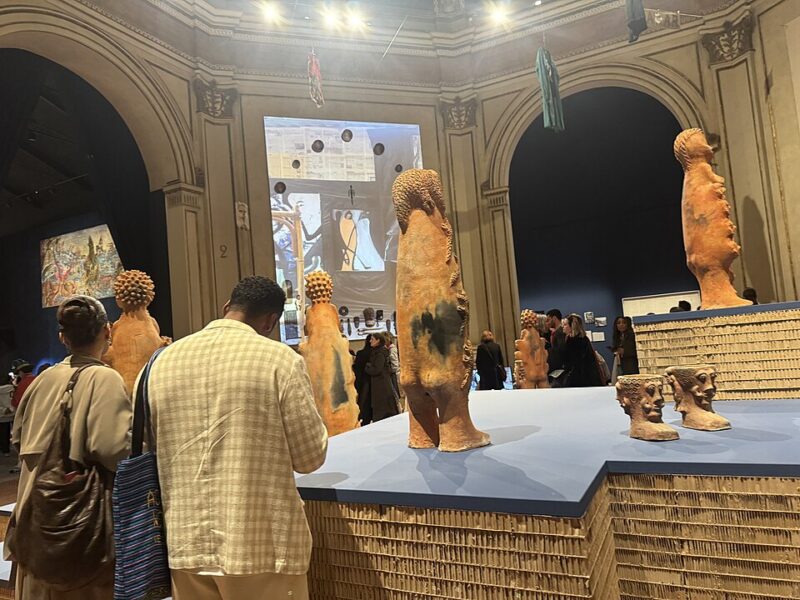
Last year, news of the Cameroonian curator Koyo Kouoh’s sudden death sent shock waves through the art world, leaving not only the Venice Biennale itself in question, but also the constellation of surrounding events.
Among these was the African Art in Venice Forum, a gathering of African artists, curators, academics and collectors that has taken place in Venice alongside the Biennale since 2017. Kouoh showed her support by coming to panels each year, said Alexandra Topalsky, a co-founder of African Art Dialogues, the organization that manages the forum.
“There were a lot of questions about what was going to happen with the Biennale in general,” Topalsky said. “We were thinking, ‘What are we going to do? Do we have an edition this year?’”
Kouoh, the first African woman to curate the Venice Biennale, died suddenly of cancer last year, but her vision for the Biennale, under the title “In Minor Keys,” is being enacted by her team. Throughout her career, she championed African artists, curators, gallerists and their work.
After speaking with past participants, it was clear that this year’s forum had to go on. After all, Kouoh’s ethos when it came to fostering conversations about African art and representation had long inspired the event.
[…]
Kouoh rose to international prominence in 2008 upon founding Raw Material, an art space in Dakar, Senegal. When the 1-54 Contemporary African Art Fair started in 2013, Kouoh created its forum program, a series of talks, panel discussions, artist conversations, film screenings, and performances.
[…]
During the forum’s first year, there were seven African countries with pavilions. While that number has grown slightly, the gap remains enormous
Learn about the 13 countries represented this year.
See artwork in our special exhibit galleries.
Comments Are Welcome
Note: We moderate submissions in order to create a space for meaningful dialogue, a space where museum visitors – adults and youth –– can exchange informed, thoughtful, and relevant comments that add value to our exhibits.
Racial slurs, personal attacks, obscenity, profanity, and SHOUTING do not meet the above standard. Such comments are posted in the exhibit Hateful Speech. Commercial promotions, impersonations, and incoherent comments likewise fail to meet our goals, so will not be posted. Submissions longer than 120 words will be shortened.
See our full Comments Policy here.