Oak Bluffs: The Legacy of Black Martha’s Vineyard and Black Artists
Share
Explore Our Galleries









Breaking News!
Today's news and culture by Black and other reporters in the Black and mainstream media.
Ways to Support ABHM?
By Levi Perrin, Word in Black
For generations, Black artists have turned to Oak Bluffs as a refuge where rest, history, and creativity converge in full, unapologetic view.
For generations, Martha’s Vineyard — near Cape Cod off the southeastern coast of Massachusetts — has been a sanctuary for Black, middle- to upper-income, educated professionals. It is a quiet storm of salt air, family reunions and porchfront conversations where the present catches its breath and the past lingers just long enough to feel familiar. Among the towns that make up this storied island, Oak Bluffs stands apart — a cultural anchor where Black history isn’t just remembered, but lived.
Long known as a haven for Black elites, artists, and intellectuals, Oak Bluffs represents more than just summer getaways. Oak Bluffs became a rare exception in an era when racial covenants and systemic barriers prevented most Black Americans from owning property elsewhere in the country. Unlike on the mainland—where Black homeownership was often blocked by government and developer-backed restrictions—on Martha’s Vineyard, such practices were never institutionalized. That freedom — the ability to build, rest, and return — planted seeds for what would become a generational retreat for Black excellence, creativity, and joy.
Dorothy West
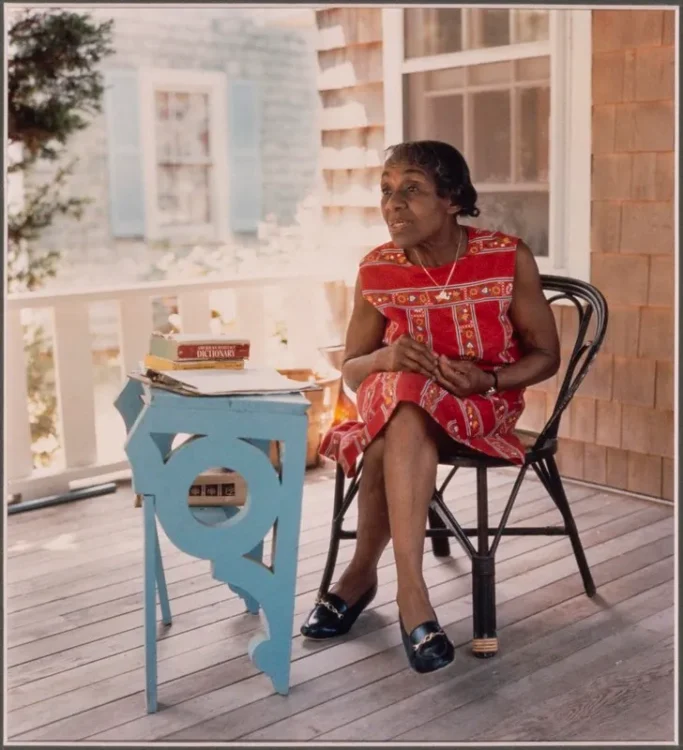
The arts have always had a seat at the Vineyard table. Harlem Renaissance author Dorothy West made the island her home for most of her adult life, weaving the richness of Black life into novels like “The Living Is Easy” and “The Wedding” — the latter set on the island and adapted into a miniseries produced by Oprah Winfrey.
West also wrote a beloved Oak Bluffs column for the Vineyard Gazette for years, documenting everything from neighborhood gossip to deep reflections on race,
Learn about other artists at the Vineyard.
Discover Black artists in our Special Exhibits.
Comments Are Welcome
Note: We moderate submissions in order to create a space for meaningful dialogue, a space where museum visitors – adults and youth –– can exchange informed, thoughtful, and relevant comments that add value to our exhibits.
Racial slurs, personal attacks, obscenity, profanity, and SHOUTING do not meet the above standard. Such comments are posted in the exhibit Hateful Speech. Commercial promotions, impersonations, and incoherent comments likewise fail to meet our goals, so will not be posted. Submissions longer than 120 words will be shortened.
See our full Comments Policy here.