Black August uplifted as alternative Black History Month
Share
Explore Our Galleries









Breaking News!
Today's news and culture by Black and other reporters in the Black and mainstream media.
Ways to Support ABHM?
By Almaz Abedje, Associated Press
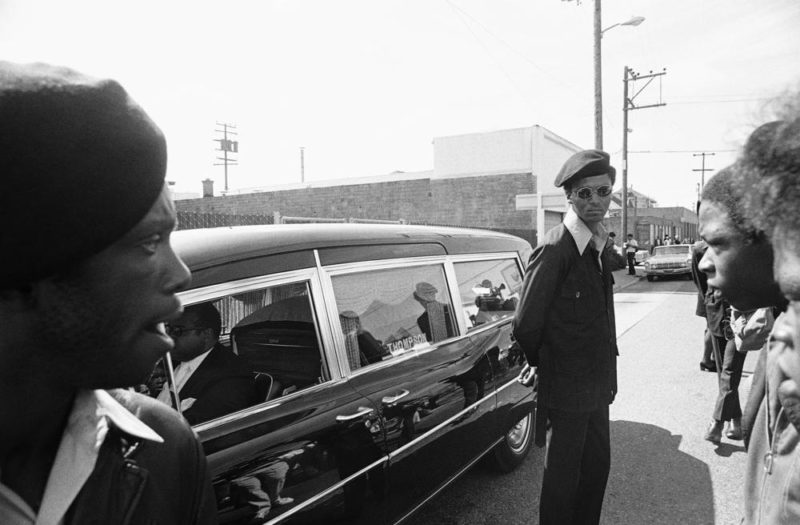
For Jonathan Peter Jackson, a direct relative of two prominent members of the Black Panther Party, revolutionary thought and family history have always been intertwined, particularly in August.
That’s the month in 1971 when his uncle, the famed Panther George Jackson, was killed during an uprising at San Quentin State Prison in California. A revolutionary whose words resonated inside and out of the prison walls, he was a published author, activist and radical thought leader.
To many, February is the month dedicated to celebrating Black Americans’ contributions to a country where they were once enslaved. But Black History Month has an alternative: It’s called Black August.
First celebrated in 1979, Black August was created to commemorate Jackson’s fight for Black liberation. Fifty-one years since his death, Black August is now a monthlong awareness campaign and celebration dedicated to Black freedom fighters, revolutionaries, radicals and political prisoners, both living and deceased.
The annual commemorations have been embraced by activists in the global Black Lives Matter movement, many of whom draw inspiration from freedom fighters like Jackson and his contemporaries.
Learn more about Black August.
Stay tuned for relevant online exhibits.
Discover more about Black history.
Comments Are Welcome
Note: We moderate submissions in order to create a space for meaningful dialogue, a space where museum visitors – adults and youth –– can exchange informed, thoughtful, and relevant comments that add value to our exhibits.
Racial slurs, personal attacks, obscenity, profanity, and SHOUTING do not meet the above standard. Such comments are posted in the exhibit Hateful Speech. Commercial promotions, impersonations, and incoherent comments likewise fail to meet our goals, so will not be posted. Submissions longer than 120 words will be shortened.
See our full Comments Policy here.