5 Things to Know: Surprising Facts About Martin Luther King Jr.
Share
Explore Our Galleries









Breaking News!
Today's news and culture by Black and other reporters in the Black and mainstream media.
Ways to Support ABHM?
From NAAMHM
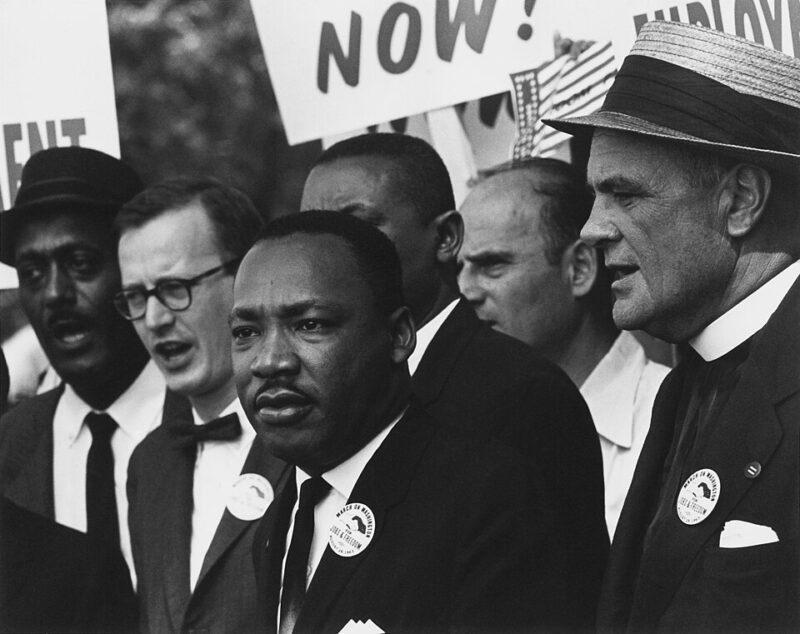
Did you know that . Martin Luther King Jr’s famous, “I Have a Dream” speech was partially improvised and that the iconic phrase was left out of the original draft?
While King had used the line in several speeches in the months prior to the March on Washington on August 28, 1963, a few of his advisors questioned its use and kept it out of the original drafts of the speech. While delivering his address to the nation, King was encouraged by his friend and legendary gospel singer, Mahalia Jackson to “tell them about the dream, Martin.” King departed from 4-minute prepared remarks to deliver one of the most famous and influential speeches of the 20th century.
Here are five more facts about the life and work of King.
1. Martin Luther King Jr. was named after Protestant reformer Martin Luther.
In 1934, King’s father, a respected Atlanta pastor known then by his birth name of Michael King Sr., embarked on a religious journey around the world. The senior King traveled to Rome, Tunisia, Egypt, Jerusalem, Bethlehem before arriving in Berlin to attend the Baptist World Alliance meeting. The trip to Germany, which occurred only one year after Adolf Hitler became chancellor, would have a profound effect on him. As he toured, the senior King gained a great respect for German monk and theologian Martin Luther, whose 95 Theses challenged the Catholic Church and ultimately split western Christianity.
Upon his return state-side, Martin Luther King Sr. changed his and his five-year-old son’s names in honor of the Protestant reformation leader. Martin Luther King Jr.’s birth certificate would reflect this change on July 23, 1957, when it was officially revised.
Head to the original article to learn the other facts about MLK.
Comments Are Welcome
Note: We moderate submissions in order to create a space for meaningful dialogue, a space where museum visitors – adults and youth –– can exchange informed, thoughtful, and relevant comments that add value to our exhibits.
Racial slurs, personal attacks, obscenity, profanity, and SHOUTING do not meet the above standard. Such comments are posted in the exhibit Hateful Speech. Commercial promotions, impersonations, and incoherent comments likewise fail to meet our goals, so will not be posted. Submissions longer than 120 words will be shortened.
See our full Comments Policy here.