Wrongfully Accused: The Exoneration of Black People
Share
Explore Our Galleries









Breaking News!
Today's news and culture by Black and other reporters in the Black and mainstream media.
Ways to Support ABHM?
By Noah A. McGee, The Root.com
Experts explain why we ‘re seeing so many high-profile exonerations of Black people in the United States during the last few decades.
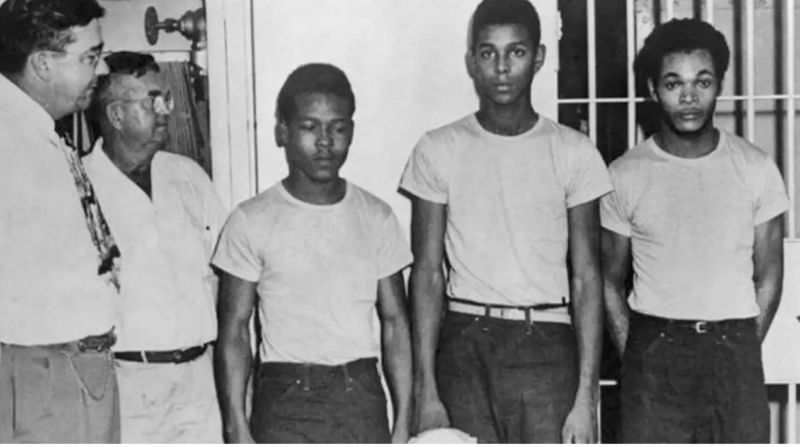
In 2021, a total of 132 people received exonerations: 81 of them were Black. Just a decade ago in 2011, only 40 Black people were exonerated. Since 1989 there’s been a 1,057 percent increase in the number of Black people released from prison because they were wrongfully convicted. Of the high-profile exonerations in 2021, the Groveland Four (a group of Black men convicted of kidnapping and raping a White teenager in 1949, including Kevin Strickland, Anthony Broadwater and Muhammad A. Aziz) were among the most celebrated. Are these high-profile exonerations a coincidence? Is it because innocence organizations have more resources? Did the aftermath of George Floyd contribute?
Dr. Yohuru Williams, founding Director of the Racial Justice Initiative at the University of St. Thomas says all of the above. “It’s definitely not a coincidence. In fact, I would argue that it’s a trend that has developed and accelerated post the murder of George Floyd.”
He acknowledges that many of these cases were already being discussed and there was pressure on officials in cases like the Groveland Four and the accused shooters of Malcolm X.
According to Williams, “the Floyd case accelerated this reckoning with problems in our criminal justice system that have led to and perpetuated these wrongful convictions of men of color, in particular, African American men. It put some real fire behind getting what most people would call ‘essential justice.’ That’s the idea that justice was denied in the moment, but in correcting the record, you are, in some sense, righting that wrong, at least in terms of the state recognizing officially that these individuals were, in fact, not guilty.”
Read the full article here.
More Breaking News here.
Comments Are Welcome
Note: We moderate submissions in order to create a space for meaningful dialogue, a space where museum visitors – adults and youth –– can exchange informed, thoughtful, and relevant comments that add value to our exhibits.
Racial slurs, personal attacks, obscenity, profanity, and SHOUTING do not meet the above standard. Such comments are posted in the exhibit Hateful Speech. Commercial promotions, impersonations, and incoherent comments likewise fail to meet our goals, so will not be posted. Submissions longer than 120 words will be shortened.
See our full Comments Policy here.