Writer Lee Hawkins connects abusive childhood in Maplewood to the Jim Crow South and slavery
Share
Explore Our Galleries









Breaking News!
Today's news and culture by Black and other reporters in the Black and mainstream media.
Ways to Support ABHM?
By Chris Hewitt, Minnesota Star Tribune
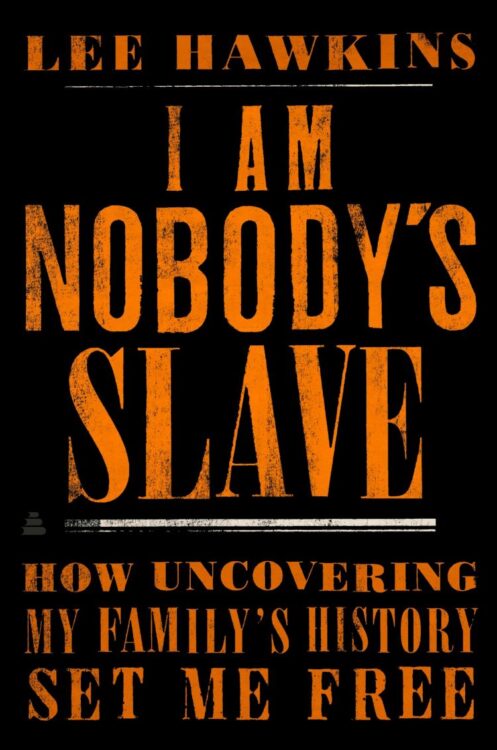
Although “I Am Nobody’s Slave” takes the form of a memoir, Minnesota native Lee Hawkins’ book becomes something bigger: an examination of where violence in Black homes originates and a plea to end corporal punishment.
Hawkins spoke last year with the Minnesota Star Tribune’s Laura Yuen about the horrific abuse he suffered, at the hands of both parents, when he was growing up in Maplewood. It’s detailed again in “Nobody’s Slave,” including an incident when he needed surgery and three months in an upper-body cast after his father stood on his back. But, after a first half that deals with his youth, “Nobody’s Slave” broadens to include research suggesting corporal punishment is a logical-but-frightening extension of America’s history of slavery.
In the book, Hawkins argues the behavior of some Black parents is directly linked to generational trauma that began when their enslaved ancestors stopped at nothing to protect their children, even if that meant harming them. The former Wall Street Journal reporter, a Pulitzer Prize finalist in 2022 for writing about the Tulsa massacre, also connects spanking to the Jim Crow-era crime of lynching, both of which often involve belts.
Hawkins, back in the Twin Cities working with MPR on a podcast about real estate discrimination, speaks about his writing roots in Minnesota, about listening to elders’ stories (citing the Alex Haley quotation, “Every time an old person dies, it’s like a library burning down”) and about working up the nerve to detail events that “for most of my life, touched me in a place too deep to open up about.”
Comments Are Welcome
Note: We moderate submissions in order to create a space for meaningful dialogue, a space where museum visitors – adults and youth –– can exchange informed, thoughtful, and relevant comments that add value to our exhibits.
Racial slurs, personal attacks, obscenity, profanity, and SHOUTING do not meet the above standard. Such comments are posted in the exhibit Hateful Speech. Commercial promotions, impersonations, and incoherent comments likewise fail to meet our goals, so will not be posted. Submissions longer than 120 words will be shortened.
See our full Comments Policy here.