Women and Girls Living in Cobalt-mining Communities in the DRC Report a “Staggering” Rise in Serious Reproductive Health Issues
Share
Explore Our Galleries









Breaking News!
Today's news and culture by Black and other reporters in the Black and mainstream media.
Ways to Support ABHM?
By Bumba Mulenga, Zambia Monitor
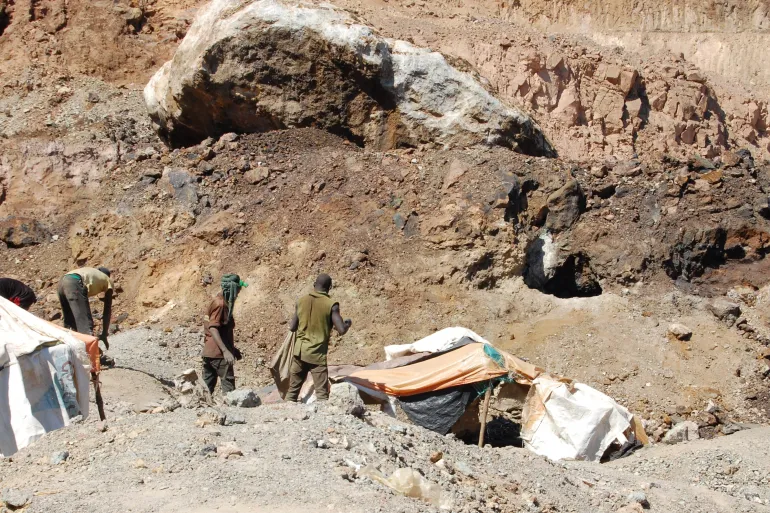
Women and girls living in cobalt-mining communities in the Democratic Republic of Congo (DRC) are reporting a “staggering” rise in serious reproductive health issues.
This includes miscarriages and birth defects, according to an investigation published by the UK-based human rights group Rights & Accountability in Development (Raid) and the Kinshasa-based NGO Afrewatch.
The report released this week showed that women and girls living around cobalt mines reported experiencing irregular menstruations, urogenital infections, vaginal mycoses and warts.
According to the report, “a paediatrician, who has been recording patients’ data since 2016, explained that the rates of genital infections and skin pathologies among female patients had exploded.
She believed this was because these populations were the primary users of ‘unclean water’, making them particularly vulnerable to diseases.”
[…]
Anaïs Tobalagba, a legal and policy researcher at Raid and the report’s lead researcher, told the Guardian: “One of the most striking findings that we discovered was the differentiated impact on women.
“We knew there had been research linking cobalt mining to reproductive health issues. But we did not know the scope of it until we began these interviews.”
In the US, exposure to something else harms Black women.
Comments Are Welcome
Note: We moderate submissions in order to create a space for meaningful dialogue, a space where museum visitors – adults and youth –– can exchange informed, thoughtful, and relevant comments that add value to our exhibits.
Racial slurs, personal attacks, obscenity, profanity, and SHOUTING do not meet the above standard. Such comments are posted in the exhibit Hateful Speech. Commercial promotions, impersonations, and incoherent comments likewise fail to meet our goals, so will not be posted. Submissions longer than 120 words will be shortened.
See our full Comments Policy here.