Wisconsin’s first Black-owned resort community, Lake Ivanhoe, receives historical status this summer.
Share
Explore Our Galleries









Breaking News!
Today's news and culture by Black and other reporters in the Black and mainstream media.
Ways to Support ABHM?
By Clare Reid, Milwaukee Journal Sentinel
This is its little-known history.
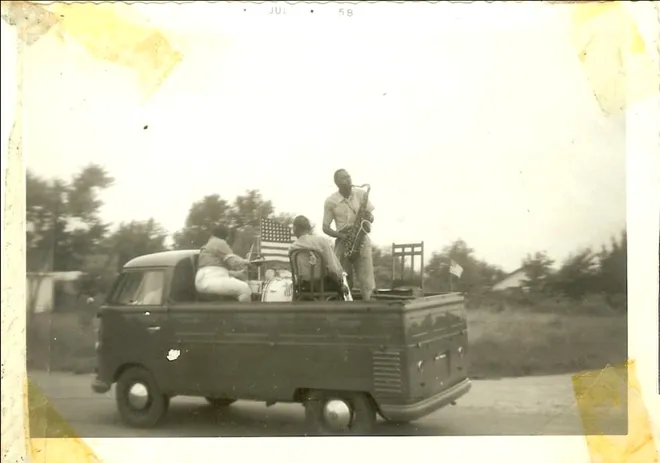
Peter Baker still clearly remembers his first visit to Lake Ivanhoe. It was 1966, and he was a preteen from the south side of Chicago.
A friend of his, whose grandfather was a big fisherman, took Baker and his younger brother there on a fishing trip. That evening, Baker returned home excited to tell his parents about this new fishing spot.
“We came home with a lot, a lot of fish and basically ran in the house with all the fish we caught that day and said ‘Mama, we were up in a community. It was all Black,'” Baker recalled. “That was really strange in Wisconsin.”
It was only two years after the Civil Rights Act of 1964 prohibited segregation in public places nationwide. Baker’s parents were intrigued by the idea of this rural, nearly all-Black subdivision just over six miles from Lake Geneva.
They went to see Lake Ivanhoe for themselves the following weekend. By the end of the weekend, Baker said, they had purchased a home there. For Baker, there was nothing better than growing up in Lake Ivanhoe and playing outside with the other neighborhood children.
Now in his 60s, Baker has lived in Lake Ivanhoe ever since. However, it wasn’t until his 40s that he discovered the community’s unique history.
Learn about that history for yourself.
In California, land that once belonged to a resort known as Bruce’s Beach has recently been returned to the owner’s descendants.
Find more articles like this in our breaking news archive.
Comments Are Welcome
Note: We moderate submissions in order to create a space for meaningful dialogue, a space where museum visitors – adults and youth –– can exchange informed, thoughtful, and relevant comments that add value to our exhibits.
Racial slurs, personal attacks, obscenity, profanity, and SHOUTING do not meet the above standard. Such comments are posted in the exhibit Hateful Speech. Commercial promotions, impersonations, and incoherent comments likewise fail to meet our goals, so will not be posted. Submissions longer than 120 words will be shortened.
See our full Comments Policy here.