Wisconsin DOC: Nonprofit can no longer send used books to prisoners
Share
Explore Our Galleries









Breaking News!
Today's news and culture by Black and other reporters in the Black and mainstream media.
Ways to Support ABHM?
By Sarah Lehr, WPR
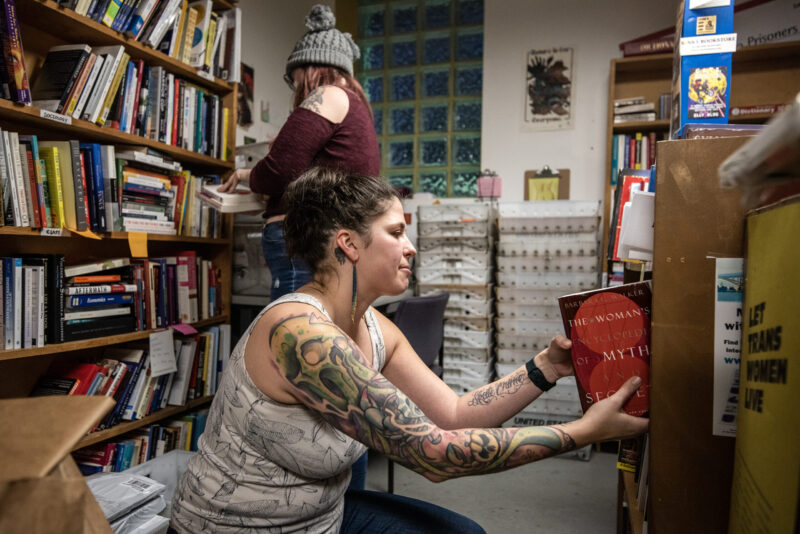
A Madison-based nonprofit has stopped sending free books to Wisconsin prisoners after the state’s Department of Corrections imposed new restrictions.
Since its inception in 2006, Wisconsin Books to Prisoners has sent more than 70,000 books to people locked up across the state.
But earlier this year, prison officials told the group of volunteers they had to stop their longstanding practice of mailing gently-used books to inmates who request them.
The new restrictions have been devastating, Books to Prisoners Co-Founder Camy Matthay said in an interview with WPR.
“Reading in prison, in a sense, makes our communities safer because prisoners are returning more prepared to contribute to their communities as valuable members,” she said. “Our point of view is that reading is a human right, and access to books of your own choosing should be a right as well.”
In emails to the nonprofit, DOC officials cited concerns about people smuggling in drugs by pretending to be affiliated with Books to Prisoners.
Continue reading to learn about the DOC’s proposed solution.
Decisions like these can disproportionately impact the Black community, which is overrepresented in prison.
Comments Are Welcome
Note: We moderate submissions in order to create a space for meaningful dialogue, a space where museum visitors – adults and youth –– can exchange informed, thoughtful, and relevant comments that add value to our exhibits.
Racial slurs, personal attacks, obscenity, profanity, and SHOUTING do not meet the above standard. Such comments are posted in the exhibit Hateful Speech. Commercial promotions, impersonations, and incoherent comments likewise fail to meet our goals, so will not be posted. Submissions longer than 120 words will be shortened.
See our full Comments Policy here.