Milwaukee museum pulls black people ‘out of the shadows of history’
Share
Explore Our Galleries









Breaking News!
Today's news and culture by Black and other reporters in the Black and mainstream media.
Ways to Support ABHM?
By Sophie Bolich, Max Nawara, and Aly Prouty, Milwaukee Neighborhood News Service
Editor’s note: This is one of an occasional series of articles about the people and places of 53206.
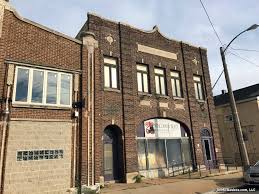
The Wisconsin Black Historical Society celebrated its 30th anniversary in 2017.
The museum sits behind a locked door in an inconspicuous red brick building on the corner of 27th and Center streets. To enter, visitors have to ring the doorbell. Clayborn Benson III, the founder of the Wisconsin Black Historical Society, personally lets them into a spacious carpeted room with white walls, covered in posters backed with construction paper, mimicking those that could be found in a classroom. They display information about African-American history in southeast Wisconsin, including the Underground Railroad and slavery in the state…
When Benson was an adult student at University of Wisconsin-Milwaukee in 1987, he produced a documentary, “Black Communities,” for a film class. The three-part film follows a grandfather as he shares stories with a young girl about black history in the United States, Wisconsin and Milwaukee. The project reignited Benson’s love of history…
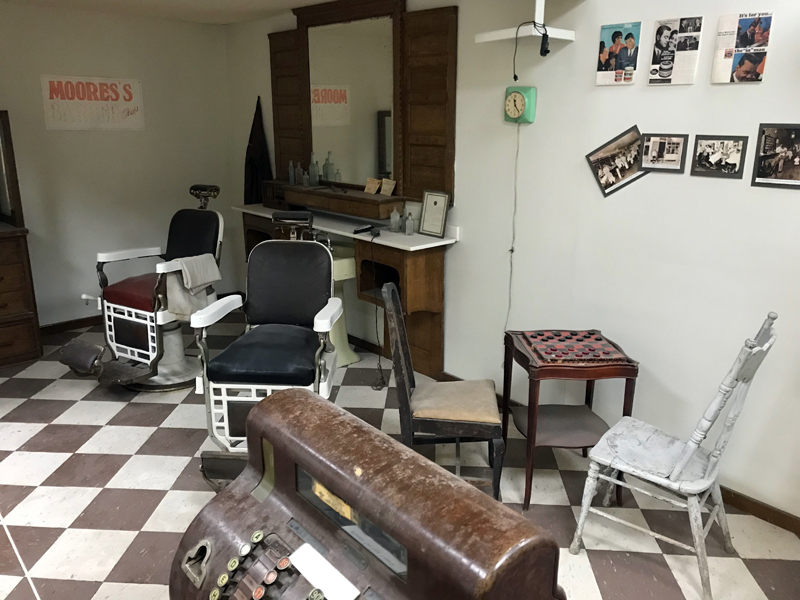
Replica of a classic Milwaukee black barbershop of yesteryear.
“Black history is American history, and you have to preserve as much as you can, as accurately as you can,” said Joanne Williams, a member of Wisconsin Black Media Association and a former colleague of Benson’s at WTMJ-TV, where he worked as a photojournalist for 39 years…
People who are ignored have something that Benson calls “Black Panther Syndrome.” “In their lifetimes they give so much to this community, and they’re hardly ever recognized. I get a great deal of joy in pulling them out of the shadows of history and pumping them up and allowing people to know who they are…”
He not only teaches at the museum, but also at schools and in daily interactions. Part of teaching, he said, is encouraging other people to write down their own stories so they can be passed down for generations. He’s even taken the task on for himself. “I’m writing mine; … I can’t ask people to write when I don’t write.”
Read the full article here.
More Breaking News here.
Comments Are Welcome
Note: We moderate submissions in order to create a space for meaningful dialogue, a space where museum visitors – adults and youth –– can exchange informed, thoughtful, and relevant comments that add value to our exhibits.
Racial slurs, personal attacks, obscenity, profanity, and SHOUTING do not meet the above standard. Such comments are posted in the exhibit Hateful Speech. Commercial promotions, impersonations, and incoherent comments likewise fail to meet our goals, so will not be posted. Submissions longer than 120 words will be shortened.
See our full Comments Policy here.