Why ‘National Dialogue on Race’ Is Needed
Share
Explore Our Galleries









Breaking News!
Today's news and culture by Black and other reporters in the Black and mainstream media.
Ways to Support ABHM?
By Peniel E. Joseph, theRoot
Many have disagreed with the concept. But a dialogue could go a long way toward jump-starting healing.
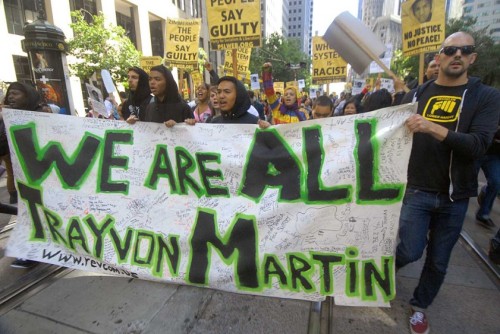
Trayvon Martin’s tragic death has inspired nationwide demonstrations and calls for action that have reverberated all the way to the White House. President Obama’s spontaneous and heartfelt words about the plight of race relations in America touched upon the need for a national conversation about race but expressed skepticism that politicians might effectively lead such an endeavor.
Obama is right on this score. It’s time for all citizens to participate in a dialogue on race in America because we all have a stake in our nation’s democratic institutions.
Such a day could go a long way toward jump-starting the dialogue on race, democracy and public policy that is desperately needed around the nation, especially (but not only) in poor communities of color. In contrast to previously called for conversations on race (including one launched by the Clinton administration) that bore little tangible fruit, this dialogue should be purposeful and policy-driven in pursuit of an agenda of democratic transformation at the local, state and national levels.
The dialogue would be led by activists, civil rights organizers, policy experts and community leaders for the express purpose of crafting public-policy solutions connected to issues of racial disparities in criminal justice, employment, public schools, housing, health care and overall life chances in America.
[…]
The March on Washington’s approaching 50th anniversary should be a time of national reflection and democratic renewal to assess how far we have actually come.
But to continue the conversation, the Center for the Study of Race and Democracy at Tufts University is convening a National Dialogue on Race Day on September 12, and we invite all to participate in local communities across the country.
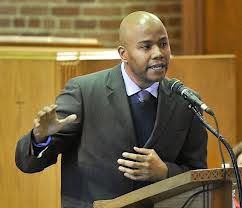
Peniel E. Joseph is founding director of the Center for the Study of Race and Democracy and a professor of history at Tufts University. He can be reached online at penielejoseph.com. Follow him on Twitter. The Center for the Study of Race and Democracy at Tufts University will convene a “National Dialogue on Race Day” on Sept. 12, 2013. The center invites all to join in the conversation. Follow the center on Twitter.
Read the full article to discover the three major themes of the discussion.
Read more Breaking News here.
Comments Are Welcome
Note: We moderate submissions in order to create a space for meaningful dialogue, a space where museum visitors – adults and youth –– can exchange informed, thoughtful, and relevant comments that add value to our exhibits.
Racial slurs, personal attacks, obscenity, profanity, and SHOUTING do not meet the above standard. Such comments are posted in the exhibit Hateful Speech. Commercial promotions, impersonations, and incoherent comments likewise fail to meet our goals, so will not be posted. Submissions longer than 120 words will be shortened.
See our full Comments Policy here.