Who Will Mourn George Whitmore?
Share
Explore Our Galleries









Breaking News!
Today's news and culture by Black and other reporters in the Black and mainstream media.
Ways to Support ABHM?
By T.J. English, New York Times
Forty-eight years ago, as a New York City teenager, George Whitmore was initiated into an ordeal at the hands of a racist criminal justice system.
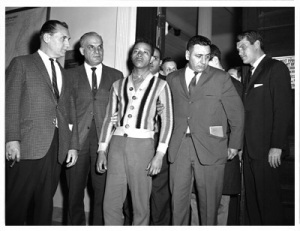
For a time, his story rattled the news cycle. He was chewed up and spit out: an ill-prepared kid vilified as a murderer, then championed as an emblem of injustice and, finally, cast aside. That he survived his tribulations and lived to the age of 68 was a miracle.
That Whitmore could die [today] without a single mention in the media is a commentary on a city and nation that would rather bury and forget the difficult aspects of our shared history.
Read more about Whitmore and the wide-ranging impact of his case here.
Learn about T.J. English’s book about the case, The Savage City: Race, Murder, and a Generation on the Edge, here.
We showcase similar people in our online exhibits and breaking news archives to give them due honor.
Comments Are Welcome
Note: We moderate submissions in order to create a space for meaningful dialogue, a space where museum visitors – adults and youth –– can exchange informed, thoughtful, and relevant comments that add value to our exhibits.
Racial slurs, personal attacks, obscenity, profanity, and SHOUTING do not meet the above standard. Such comments are posted in the exhibit Hateful Speech. Commercial promotions, impersonations, and incoherent comments likewise fail to meet our goals, so will not be posted. Submissions longer than 120 words will be shortened.
See our full Comments Policy here.
Dear Mr. English:
I read your article “Who will Mourns George Whitmore? and was deeply touch by it. It is a sad and not unfamiliar story of black Americans wrongfully convicted. I found this particular story very moving and would like to further speak with you about George Whitmore.
I am an independent Producer/Director of documentaries and educational films. My most recently “Celebrating Life in Union” narrated by Andy deals with Cuban former political prisoners. I will be away for a few weeks but can be contacted via email. Thank.
Who Will Mourn George Whitmore?
Writer T.J. English wastes no time in this accusatory question/headline published in The NYTimes 10/13/12 that reflects a too typical life story of a black teenage boy quickly chained, both physically and emotionally, by a racist U.S. justice system. In 1963, I was white female just out of high school, I had a house to come home to in a safe area of Philadelphia, and enough food. Did I say I was white? Thank you, Mr. English for writing your painful and instructive words about George. ‘His’ story is posted on my office wall here and I will. remember. and honor. this young man and the living hell we good white people availed him. in\\(inadequate words but my heart knows I care. deeply.)