What’s Behind the Wave of Convictions for Police and Vigilantes? It’s More Than Woke Jurors.
Share
Explore Our Galleries









Breaking News!
Today's news and culture by Black and other reporters in the Black and mainstream media.
Ways to Support ABHM?
By Christina Carrega, Capital B
Changing attitudes fostered by the Black Lives Matter movement have spurred more prosecutors to take action.
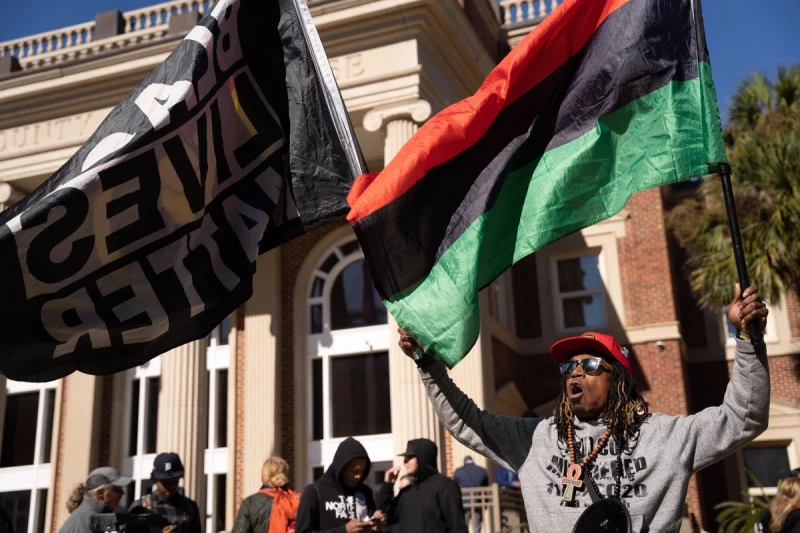
Juries in recent months have been handing down guilty verdicts against police officers and white vigilantes in a series of rare convictions for a legal system that historically has failed to render justice for Black victims.
Last month, three white men in Georgia were convicted of committing a hate crime when they murdered Ahmaud Arbery, a 25-year-old Black man jogging in their neighborhood. Days later, three former Minneapolis police officers were convicted of violating George Floyd’s civil rights when he died in their custody, a death that previously led to a murder conviction for a fourth officer. And in nearby Brooklyn Center, Minnesota, a police officer was convicted of causing the death of Daunte Wright when she mistook her gun for a Taser.
“These convictions are not perfect, but they foreshadow the possibility of a deeper system of justice to come,” said Melina Abdullah, director of Black Lives Matter Grassroots and co-founder of Black Lives Matter Los Angeles. “The convictions are proof that the years of massive, coordinated protests in cities around the world effectively put pressure on the U.S. government to make moves to hold police and vigilantes alike accountable for the crimes they commit against Black people.”
The recent convictions are a notable deviation for the nation’s criminal justice system, which has codified protections for police officers and has a lengthy track record of soft-pedaling justice for Black victims. Legal experts credit a combination of factors: the elections of progressive prosecutors who are open to charging police officers, a more informed jury pool equipped with video evidence, and fellow officers who have had the courage to speak out against colleagues when they witness misconduct.
Head over to Capital B to discover what’s behind this attitude shift.
Learn how just a few years ago, Freddie Gray’s case led to a mistrial. Ten years after Trayvon Martin’s death, his mother notes the need to continue fighting for justice.
Stay in the know by checking out our breaking news page.
Comments Are Welcome
Note: We moderate submissions in order to create a space for meaningful dialogue, a space where museum visitors – adults and youth –– can exchange informed, thoughtful, and relevant comments that add value to our exhibits.
Racial slurs, personal attacks, obscenity, profanity, and SHOUTING do not meet the above standard. Such comments are posted in the exhibit Hateful Speech. Commercial promotions, impersonations, and incoherent comments likewise fail to meet our goals, so will not be posted. Submissions longer than 120 words will be shortened.
See our full Comments Policy here.