Video Shows Chicago Cop Shooting Unarmed Black Teen With A Disability
Share
Explore Our Galleries


Breaking News!
Today's news and culture by Black and other reporters in the Black and mainstream media.
Ways to Support ABHM?
By David Lohr, The Huffington Post
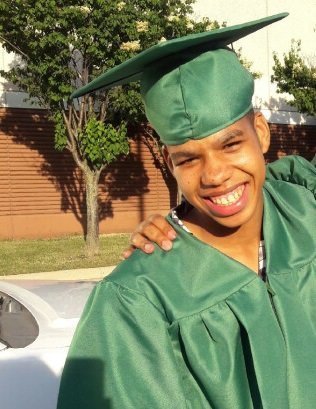
Ricardo “Ricky” Hayes, the disabled teen, who was shot by police after his caregiver reported him missing.
A civilian oversight agency has released a series of videos from 2017 that show an off-duty Chicago police officer shooting and wounding an unarmed black teen with an intellectual disability.
In the videos, which were recorded in the early hours of Aug. 13, 2017, Ricardo “Ricky” Hayes, who is black, is seen running through a Far South Side neighborhood as an SUV follows. Hayes, who was 18 at the time, eventually stops in front of a home on South Hermosa Avenue.
The SUV can be seen stopping in the middle of the street, but the driver remains seated inside. Seconds later, as Hayes slowly steps toward the street, two gunshots ring out. Hayes is then seen running out of view. The vehicle’s lone occupant briefly exits the vehicle before driving off.
The Civilian Office of Police Accountability on Tuesday released the videos ― seven in all ― along with audio files and police reports, which identify the driver of the SUV as Chicago police Sgt. Khalil Muhammad.
It’s unclear if Hayes, who police later said was unarmed, knew Muhammad was a police officer. At the time of the shooting, Muhammad was off-duty and driving his personal vehicle, Chicago police said in a statement released the day of the shooting.
The statement alleged that Hayes was “behaving suspiciously” prior to the shooting and “became elusive and unresponsive.” It further alleged that the encounter escalated at some point, “prompting the sergeant to discharge his service weapon.”
A lawsuit filed earlier this year on behalf of Hayes said he “functions at the cognitive level of a child, and he has difficulty communicating.”
Prior to the shooting, Hayes’ caretaker reported him missing and informed police of his disability, according to the lawsuit. The documents claim Hayes had been walking around and was not engaged in any criminal activity.
“Ricky looks much younger than his age and his disabilities are immediately recognizable,” the lawsuit says.
Muhammad has not been criminally charged, and has been on paid administrative leave since the shooting. An investigation into the case is ongoing. Authorities have not said when it will be complete.
Read full article here
Read more breaking news here
View more galleries from ABHM here
Comments Are Welcome
Note: We moderate submissions in order to create a space for meaningful dialogue, a space where museum visitors – adults and youth –– can exchange informed, thoughtful, and relevant comments that add value to our exhibits.
Racial slurs, personal attacks, obscenity, profanity, and SHOUTING do not meet the above standard. Such comments are posted in the exhibit Hateful Speech. Commercial promotions, impersonations, and incoherent comments likewise fail to meet our goals, so will not be posted. Submissions longer than 120 words will be shortened.
See our full Comments Policy here.