U.S. museum returns artifacts to Ghana that were looted 150 years ago by British forces
Share
Explore Our Galleries









Breaking News!
Today's news and culture by Black and other reporters in the Black and mainstream media.
Ways to Support ABHM?
By Francis Kokutse, Associated Press
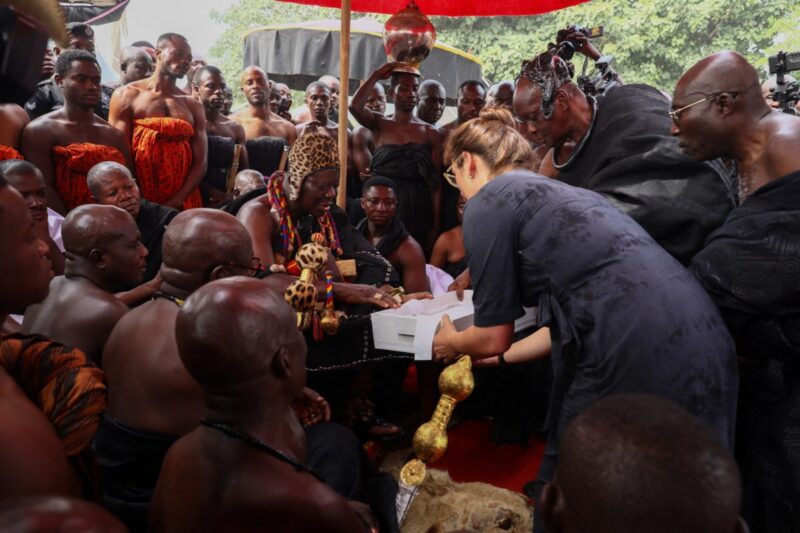
Seven royal artifacts looted 150 years ago by British colonial forces from Ghana’s ancient Asante kingdom and kept by a United States museum have been returned and presented to the kingdom on Thursday, the latest of a series of stolen treasured items being repatriated to several African countries.
Looted from British-colonized Ghana in the 19th century before being transferred to Fowler Museum at the University of California, Los Angeles, in the 1960s, the artifacts included an elephant tail whisk, an ornamental chair made of wood, leather and iron, two gold stool ornaments, a gold necklace and two bracelets.
““We are here … (because) the white man came into Asanteman to loot and destroy it,” Otumfuo Osei Tutu, the king of the Assante kingdom in Ghana’s largest city of Kumasi, said at a presentation ceremony that brought joy and relief to the kingdom.
Learn more about efforts to repatriate artifacts.
Aside from artifacts, many museums have unethically collected human remains.
Comments Are Welcome
Note: We moderate submissions in order to create a space for meaningful dialogue, a space where museum visitors – adults and youth –– can exchange informed, thoughtful, and relevant comments that add value to our exhibits.
Racial slurs, personal attacks, obscenity, profanity, and SHOUTING do not meet the above standard. Such comments are posted in the exhibit Hateful Speech. Commercial promotions, impersonations, and incoherent comments likewise fail to meet our goals, so will not be posted. Submissions longer than 120 words will be shortened.
See our full Comments Policy here.