Trump’s National Park Service Brings Its Revisionist History to the Underground Railroad
Share
Explore Our Galleries









Breaking News!
Today's news and culture by Black and other reporters in the Black and mainstream media.
Ways to Support ABHM?
By Peter Wade, Rolling Stone
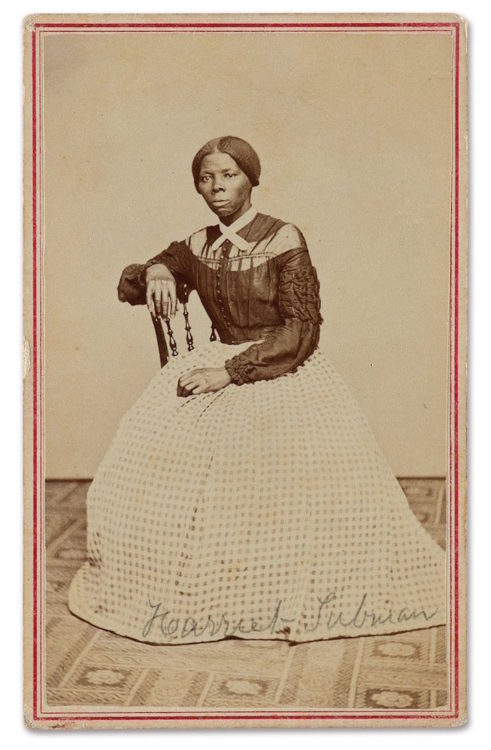
The National Park Service has edited a page on its website that describes the Underground Railroad to reduce the emphasis on Harriet Tubman, instead highlighting “Black/White cooperation.”
The Washington Post first reported the changes, noting that the government replaced a large portrait of Tubman as well as a quote at the top of the page where Tubman described herself as “the conductor of the Underground Railroad for eight years.” In place of Tubman’s portrait is a collage of five U.S. Postal Service stamps that depict Black and white abolitionist figures, including Tubman, who were involved in helping to bring escaped enslaved people to the north.
“The Underground Railroad — the resistance to enslavement through escape and flight, through the end of the Civil War — refers to the efforts of enslaved African Americans to gain their freedom by escaping bondage,” the page used to read.
The opening lines of the page no longer mention slavery but call the Underground Railroad “one of the most significant expressions of the American civil rights movement.” It also states that the network “bridged the divides of race.”
According to the Post, since Trump returned to office, dozens of government-owned webpages have “softened descriptions of some of the most shameful moments of the nation’s past,” including erasing or editing references to slavery and Jim Crow-era segregation.
Learn about Tubman’s work in New York, the secrets of her life and the first Underground Railroad.
Comments Are Welcome
Note: We moderate submissions in order to create a space for meaningful dialogue, a space where museum visitors – adults and youth –– can exchange informed, thoughtful, and relevant comments that add value to our exhibits.
Racial slurs, personal attacks, obscenity, profanity, and SHOUTING do not meet the above standard. Such comments are posted in the exhibit Hateful Speech. Commercial promotions, impersonations, and incoherent comments likewise fail to meet our goals, so will not be posted. Submissions longer than 120 words will be shortened.
See our full Comments Policy here.