Trump escalates attacks against Smithsonian museums, says there’s too much focus on ‘how bad slavery was’
Share
Explore Our Galleries









Breaking News!
Today's news and culture by Black and other reporters in the Black and mainstream media.
Ways to Support ABHM?
By Kit Maher, Piper Hudspeth Blackburn, CNN
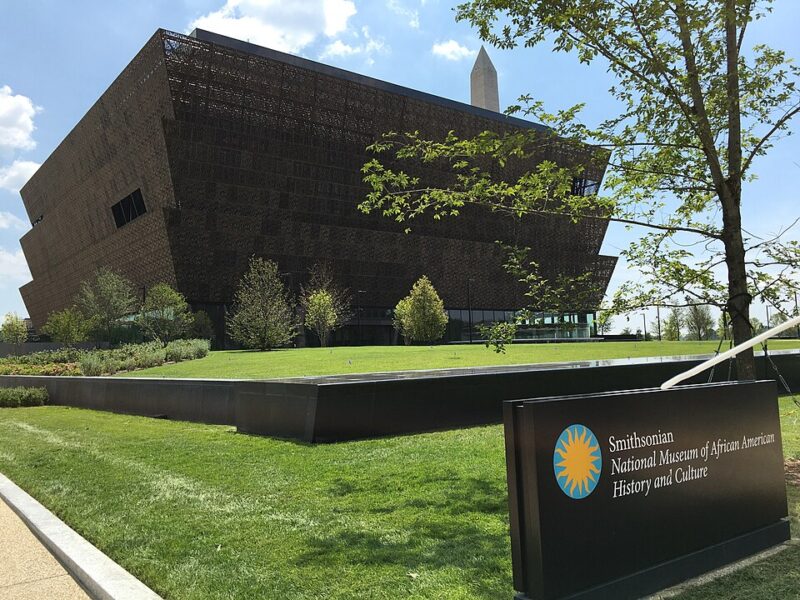
President Donald Trump escalated his campaign to purge cultural institutions of materials that conflict with his political directives on Tuesday, alleging museums were too focused on highlighting negative aspects of American history, including “how bad slavery was.”
In a Truth Social post, Trump directed his attorneys to conduct a review of museums, comparing the effort to his crackdown on universities across the country.
“The Smithsonian is OUT OF CONTROL, where everything discussed is how horrible our Country is, how bad Slavery was, and how unaccomplished the downtrodden have been — Nothing about Success, nothing about Brightness, nothing about the Future,” Trump wrote.
Trump’s comments come days after the White House announced an unprecedented, sweeping review of the Smithsonian Institution, which runs the nation’s major public museums. The initiative, a trio of top Trump aides wrote in a letter to Smithsonian Institution secretary Lonnie Bunch III last week, “aims to ensure alignment with the President’s directive to celebrate American exceptionalism, remove divisive or partisan narratives, and restore confidence in our shared cultural institutions.”
The letter said the review would focus on public-facing content, the curatorial process to understand how work is selected for exhibits, current and future exhibition planning, the use of existing materials and collections and guidelines for narrative standards.
Bunch — who has served as Secretary of the Smithsonian Institution since 2019 and is the first African American to hold the position — has made multiple comments about the importance of educating people about slavery through the National Museum of African American History and Culture specifically. He told Smithsonian Magazine that part of the purpose of that museum “was to help a nation understand itself — an impossible task without the full recognition of the horrors of slavery.”
You can always discover the truth about slavery in our physical and virtual museums.
Comments Are Welcome
Note: We moderate submissions in order to create a space for meaningful dialogue, a space where museum visitors – adults and youth –– can exchange informed, thoughtful, and relevant comments that add value to our exhibits.
Racial slurs, personal attacks, obscenity, profanity, and SHOUTING do not meet the above standard. Such comments are posted in the exhibit Hateful Speech. Commercial promotions, impersonations, and incoherent comments likewise fail to meet our goals, so will not be posted. Submissions longer than 120 words will be shortened.
See our full Comments Policy here.