A Philly family bought their first home thanks to reparations from Quakers in Germantown
Share
Explore Our Galleries









Breaking News!
Today's news and culture by Black and other reporters in the Black and mainstream media.
Ways to Support ABHM?
Michaelle Bond, Philadelphia Inquirer
Green Street Friends Meeting, a Quaker congregation in Germantown, pledged to spend $50,000 a year for 10 years as part of its reparations work. It’s helping Black Philadelphians become homeowners.
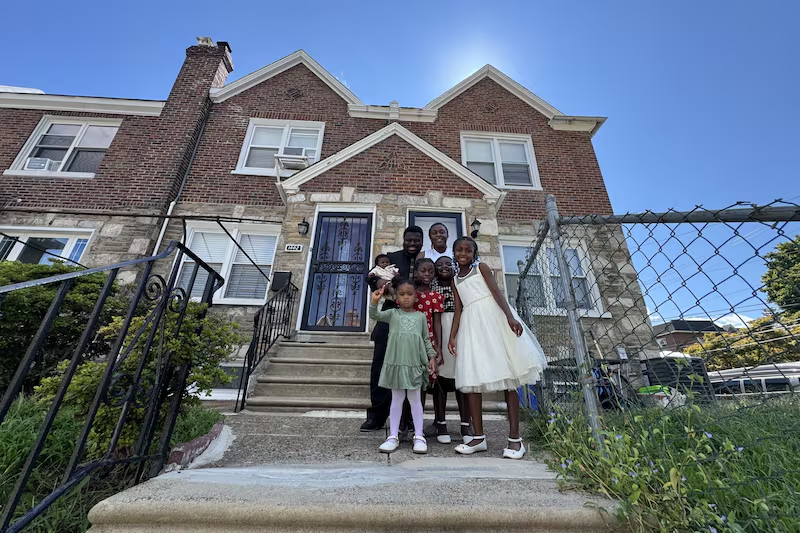
Charmira and Quincy Pilgrim wanted to become homeowners a decade ago when they got married.
But over the years, job losses, jobs that didn’t pay enough, children, unpaid maternity leave, and rising costs of living made saving for homeownership impossible.
They were finally able to start putting money away late last year. And this spring, they found a $315,000 house they wanted to buy in West Oak Lane. But they were short thousands of dollars for their down payment and closing costs.
What got them and their five children into their new home was a $10,000 first-time homebuyer grant funded by a group of Quakers in Germantown.
“It was a blessing that I ended up getting the grant because money was tight,” said Charmira, a 32-year-old special education teacher and case manager.
Up-front cost is a common barrier to homeownership for renters in Philadelphia and across the country. Grants for down payments and closing costs can help aspiring homeowners get in the door. Governments, mortgage lenders, and nonprofits are common funders.
That’s what makes the Pilgrims’ grant stand out. It’s one of five $10,000 grants that Green Street Friends Meeting, a Quaker congregation in Germantown, is funding to help people buy their first homes. It’s part of the congregation’s racial justice plan to redistribute wealth to Black residents in the Germantown area as a form of reparations.
When Green Street announced the homebuyer grants in March, it said it sees reparations as “economic and spiritual repair for the intergenerational harms of slavery, Jim Crow, and their afterlives.” Reparations, it said, are “intended to address the theft and pillaging of Black wealth” for hundreds of years through systemic discrimination.
Learn more about the period known as Jim Crow.
Comments Are Welcome
Note: We moderate submissions in order to create a space for meaningful dialogue, a space where museum visitors – adults and youth –– can exchange informed, thoughtful, and relevant comments that add value to our exhibits.
Racial slurs, personal attacks, obscenity, profanity, and SHOUTING do not meet the above standard. Such comments are posted in the exhibit Hateful Speech. Commercial promotions, impersonations, and incoherent comments likewise fail to meet our goals, so will not be posted. Submissions longer than 120 words will be shortened.
See our full Comments Policy here.