To Help Black Developers, Programs Start With Access to Capital
Share
Explore Our Galleries









Breaking News!
Today's news and culture by Black and other reporters in the Black and mainstream media.
Ways to Support ABHM?
Several banks have announced initiatives totaling billions of dollars that are aimed at addressing racial inequalities, but observers say the programs need to be carefully tailored.
By: Amanda Abrams, The New York Times
Today, commercial real estate remains a field in which the vast majority of developers are white. Few reliable statistics are available, but the industry association NAIOP reported in a 2013 survey, the most recent year available, that 4.4 percent of commercial real estate professionals were Black. This year, just 5 percent of Urban Land Institute’s members described themselves as Black or African-American.
The disparity has many sources, including many African-Americans’ unfamiliarity with the field and subsequent dearth of connections. But the biggest challenge, Black developers say, is gaining access to capital, including loans, loan guarantees and equity. That may be the result of limited balance sheets, short track records or a lack of wealthy and influential networks. As a result, their firms struggle to grow and remain on the margins as cities around the country see their downtowns reshaped by other, deep-pocketed developers.
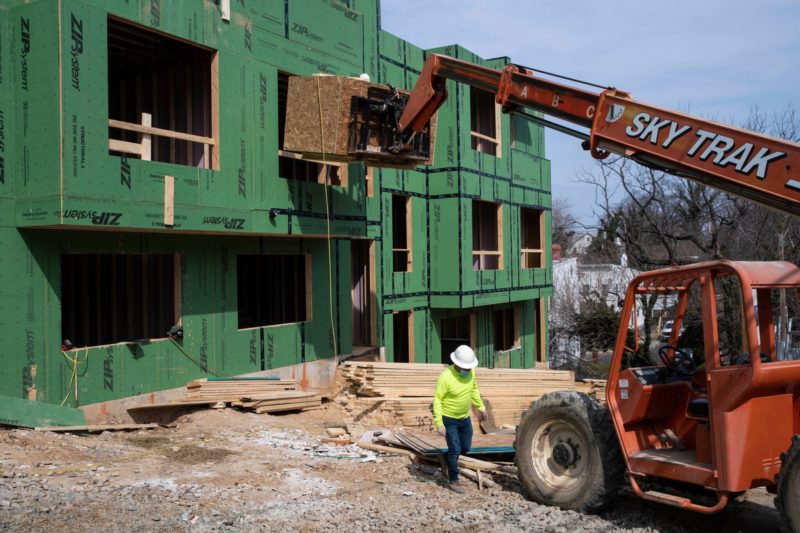
Sarah Silbiger, The New York Times
Banking giants like Bank of America, Citigroup and JPMorgan Chase, as well as smaller institutions, have announced initiatives totaling billions of dollars that are largely focusing on communities and entrepreneurs of color. Some of the funding is earmarked for affordable housing and commercial development in low-income communities, which will benefit all real estate developers.
Longtime practitioners and analysts in the field say that if new dollars are to redress the industry’s racial imbalance, the funds need to be carefully designed so that more of the money winds up in the hands of Black developers.
To learn more about African-American businesses here and here.
More Breaking News here.
Comments Are Welcome
Note: We moderate submissions in order to create a space for meaningful dialogue, a space where museum visitors – adults and youth –– can exchange informed, thoughtful, and relevant comments that add value to our exhibits.
Racial slurs, personal attacks, obscenity, profanity, and SHOUTING do not meet the above standard. Such comments are posted in the exhibit Hateful Speech. Commercial promotions, impersonations, and incoherent comments likewise fail to meet our goals, so will not be posted. Submissions longer than 120 words will be shortened.
See our full Comments Policy here.