‘The worshipping of whiteness’: why racist symbols persist in America
Share
Explore Our Galleries









Breaking News!
Today's news and culture by Black and other reporters in the Black and mainstream media.
Ways to Support ABHM?
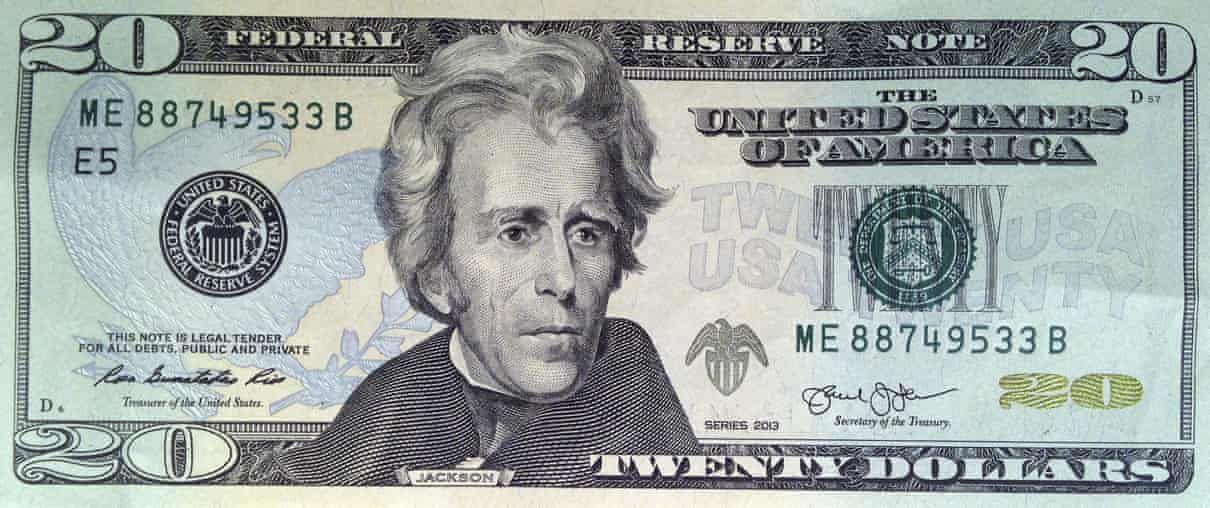
Abolitionist Harriet Tubman was supposed to supplant Andrew Jackson on the $20 bill. Then came the Trump administration. Photograph: AP
Tributes to a checkered past exist all over the US, even as Confederate statues are removed and brands reconsider racial stereotypes
By Alexandra Villarreal, the guardian.com
In life, the seventh US president, Andrew Jackson, and his family accrued their wealth at the expense of hundreds of enslaved people. Now, even in death, Jackson still wields the power to haunt Black Americans whenever they pull a $20 bill from their wallets.
“Racism isn’t always abrupt. It isn’t always in your face. Sometimes, it’s very insidious,” said Franklin Eugene Forbes II, an architect and urban planner. “Why am I, a Black person, using a bill where a man who believed I was inferior to somebody else as a way to buy things, the same way people that look like me were bought by him?”
For weeks now, historic protests against systemic racial inequity and injustice have also reinvigorated passionate debate around the most obvious memorials to slavery, white supremacy and racism across the United States. A growing number of the nearly 800 Confederate statues and monuments in the US have been removed, alongside a few toppled or defaced homages to founding fathers who profited from slavery.
Brands such as Aunt Jemima, Uncle Ben’s and Cream of Wheat are reconsidering the racial stereotypes emblazoned on their packaging. Gone With the Wind was temporarily pulled from HBO Max, and Nascar devotees no longer have the green light to unfurl Confederate battle flags at races.
But plenty of other symbols persist.
Abolitionist Harriet Tubman was supposed to supplant Jackson on the $20 bill. Then came the Trump administration…
The redesigned bill with Tubman’s portrait was originally expected to debut in 2020. But last year, the treasury secretary, Steve Mnuchin, announced that the unveiling had been delayed. He has since said the new version won’t be released for another decade and may not even feature Tubman…
Full article here
More Breaking News here
ABHM galleries here
More about President Andrew Jackson here
Comments Are Welcome
Note: We moderate submissions in order to create a space for meaningful dialogue, a space where museum visitors – adults and youth –– can exchange informed, thoughtful, and relevant comments that add value to our exhibits.
Racial slurs, personal attacks, obscenity, profanity, and SHOUTING do not meet the above standard. Such comments are posted in the exhibit Hateful Speech. Commercial promotions, impersonations, and incoherent comments likewise fail to meet our goals, so will not be posted. Submissions longer than 120 words will be shortened.
See our full Comments Policy here.