The two forgotten Black boys who died the day of the Birmingham church bombing
Share
Explore Our Galleries









Breaking News!
Today's news and culture by Black and other reporters in the Black and mainstream media.
Ways to Support ABHM?
By Char Adams, NBC
Johnny Robinson and Virgil Ware.
Outside of Birmingham, Alabama, those names have gone largely forgotten in the decades since Robinson and Ware died on Sept. 15, 1963, the day four Black girls were killed in the 16th Street Baptist Church bombing.
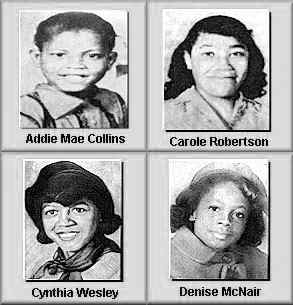
They died in the erupting chaos after the Ku Klux Klan bombed the church that morning in an attack that killed 14-year-olds Addie Mae Collins, Cynthia Wesley and Carol Robertson and 11-year-old Denise McNair. In the uprising that followed, a white police officer killed Robinson and a white teenager killed Ware.
“For so long, the four little girls got all the recognition, and they forgot about the two little boys,” James Ware, Virgil’s older brother, told The Birmingham News in 2013.
Aside from the four girls, Robinson, 16, and Ware, 13, were the only two people to die in the aftermath of the attack that day. Robinson was with his friends when a group of white people drove by waving Confederate flags, throwing garbage and hurling racist slurs at the Black group, according to NPR. Witnesses said then that a police car arrived after Robinson and his friends were seen throwing rocks at a car draped in a Confederate flag.
[…]
Consumed by grief, the Robinsons didn’t talk much about the teen’s death, especially after local and federal grand juries decided not to prosecute Jack Parker, the officer who killed him, NPR reported. Parker died in 1977.
Discover the details of Robinson and Ware’s deaths.
Birmingham also played an important role in the Civil Rights Movement.
Comments Are Welcome
Note: We moderate submissions in order to create a space for meaningful dialogue, a space where museum visitors – adults and youth –– can exchange informed, thoughtful, and relevant comments that add value to our exhibits.
Racial slurs, personal attacks, obscenity, profanity, and SHOUTING do not meet the above standard. Such comments are posted in the exhibit Hateful Speech. Commercial promotions, impersonations, and incoherent comments likewise fail to meet our goals, so will not be posted. Submissions longer than 120 words will be shortened.
See our full Comments Policy here.