‘The Snowy Day’: Children’s Book With Black Protagonist is Focus of Exhibit
Share
Explore Our Galleries









Breaking News!
Today's news and culture by Black and other reporters in the Black and mainstream media.
Ways to Support ABHM?
By Joann Loviglio, Associated Press, TheGrio
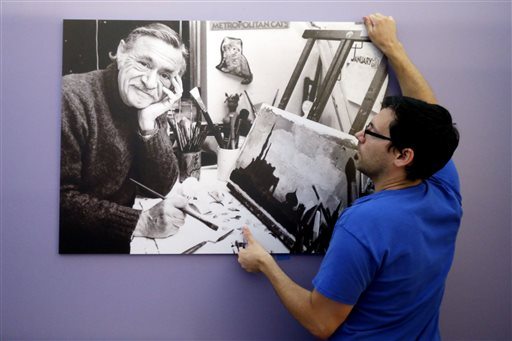
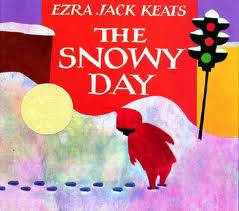
PHILADELPHIA (AP) — During the height of the civil rights movement, a gentle book about a black boy in a red snowsuit crunch-crunch-crunching through the snow broke down racial barriers and now is the subject of an upcoming exhibit.
Ezra Jack Keats’ beloved 1962 book, “The Snowy Day,” is credited as the first mass-market children’s storybook to feature a black protagonist — a preschooler named Peter joyfully exploring the snow-covered sidewalks in his New York City neighborhood.
[…]
Peter’s world was also a reflection of Keats’ own environment, Perelman said, “the city streets where he felt comfortable, where he called home and that happened to be inhabited by working-class and poor folks and by African-American folks.”
“That’s who he felt should be in his books. This isn’t ‘Eloise,'” he said, referring to the children’s book character who lives in Manhattan’s posh Plaza Hotel with her nanny. “It’s a very different New York City.”
[…[
“If you look at children’s literature previous to ‘The Snowy Day,’ there are very few positive examples of publications for African-American children,” Perelman said, “and there’s a whole lot of very derogatory, stereotypical and outright racist material.”
Keats, who died in 1983, illustrated more than 85 books. In six more books after “The Snowy Day,” readers followed Peter growing up from a kindergarten-age boy to an adolescent. His race was never mentioned
To read the full article, click here.
To find more Breaking News, click here.
Comments Are Welcome
Note: We moderate submissions in order to create a space for meaningful dialogue, a space where museum visitors – adults and youth –– can exchange informed, thoughtful, and relevant comments that add value to our exhibits.
Racial slurs, personal attacks, obscenity, profanity, and SHOUTING do not meet the above standard. Such comments are posted in the exhibit Hateful Speech. Commercial promotions, impersonations, and incoherent comments likewise fail to meet our goals, so will not be posted. Submissions longer than 120 words will be shortened.
See our full Comments Policy here.