The Road to Reparations Through Black Genealogy
Share
Explore Our Galleries









Breaking News!
Today's news and culture by Black and other reporters in the Black and mainstream media.
Ways to Support ABHM?
By Pendarvis Harshaw, KQED
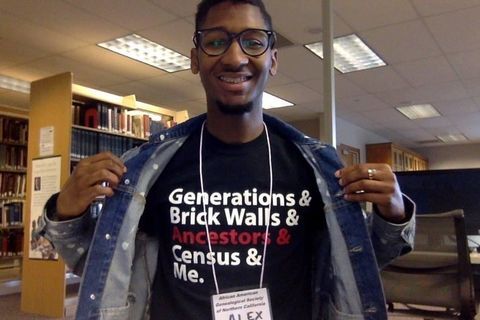
Alex Trapps-Chabala is a young genealogist whose main focus is tracing the lineage of African American people.
He grew up between East Sacramento and the Bay Area. But as preteen, his family sent him to live with with relatives in Alabama to get some discipline for an attitude problem. It was that time spent in the south that pushed Alex toward becoming a genealogist.
Alex says that while in Alabama, his grandmother taught him about his family and showed him how to dig through archives and records in order to uncover more information.
As he got more invested in genealogy, he saw gaps in how African American history is told, as well as opportunities to illuminate more Black family histories.
Alex began pulling up vital records, census records and even digitizing records of home births. With the help of others in his field, Alex is compiling a database he hopes will be a resource for African American families.
Now through his startup, The KinConnector, Alex is aiming to have an easy to use database that fills voids in African American histories…
Read the full article here
Learn more about Black Geneology here and Reparations here
More Breaking News here
Comments Are Welcome
Note: We moderate submissions in order to create a space for meaningful dialogue, a space where museum visitors – adults and youth –– can exchange informed, thoughtful, and relevant comments that add value to our exhibits.
Racial slurs, personal attacks, obscenity, profanity, and SHOUTING do not meet the above standard. Such comments are posted in the exhibit Hateful Speech. Commercial promotions, impersonations, and incoherent comments likewise fail to meet our goals, so will not be posted. Submissions longer than 120 words will be shortened.
See our full Comments Policy here.