The Real Uncle Tom, Josiah Henson, is a Black Hero
Share
Explore Our Galleries









Breaking News!
Today's news and culture by Black and other reporters in the Black and mainstream media.
Ways to Support ABHM?
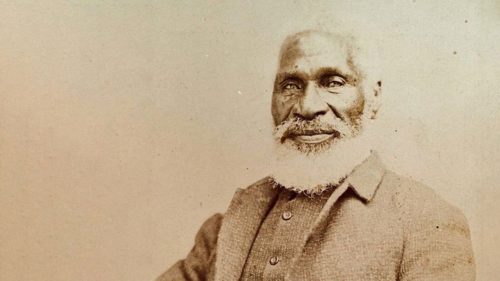
onheritage, Toronto, Canada
He inspired the story ‘Uncle Tom’s Cabin’, but he was no ‘Uncle Tom.’
By Manseen Logan, Blavity.com
Note: This article is part of Blavity’s #MakingHistoryWhileBlack Black History Month series, where we are highlighting unsung historical black figures whose personal stories are deserving of more prominence.
When we call someone an “Uncle Tom,” we’re usually not saying it as a compliment. We reserve the name for Black conservativeFox News commentators and skin folks who clearly ain’t kinfolks. However, as it turns out, the real-life Uncle Tom, Josiah Henson, wasn’t an “Uncle Tom” at all.
Henson’s story was unintentionally overshadowed by the 1865 classic Uncle Tom’s Cabin. Harriet Beecher Stowe wrote the book to show Christian America the ugly controversial truths about slavery. In Stowe’s story, Uncle Tom acts as a moral overly forgiving slave, with an unyielding loyalty and compassion for his master.
The character’s blind benevolence in the face of immense cruelty makes most Black folks gag. At the same time, the book is credited for sparking the American Civil War that eventually ended slavery. In her subsequent book, A Key to Uncle Tom’s Cabin, Stowe admitted that the famed character wasn’t pulled from her imagination. Uncle Tom was partially constructed using stories taken from Henson’s autobiography The Life of Josiah Henson, Formerly a Slave, Now an Inhabitant of Canada, as Narrated by Himself, published in 1849…
Full article here
Comments Are Welcome
Note: We moderate submissions in order to create a space for meaningful dialogue, a space where museum visitors – adults and youth –– can exchange informed, thoughtful, and relevant comments that add value to our exhibits.
Racial slurs, personal attacks, obscenity, profanity, and SHOUTING do not meet the above standard. Such comments are posted in the exhibit Hateful Speech. Commercial promotions, impersonations, and incoherent comments likewise fail to meet our goals, so will not be posted. Submissions longer than 120 words will be shortened.
See our full Comments Policy here.