The Fisk Jubilee Singers’ amazing story, from slavery to stardom
Share
Explore Our Galleries









Breaking News!
Today's news and culture by Black and other reporters in the Black and mainstream media.
Ways to Support ABHM?
By Bill Newcott, National Geographic
They introduced Black spirituals to the world—and saved their university from financial ruin.
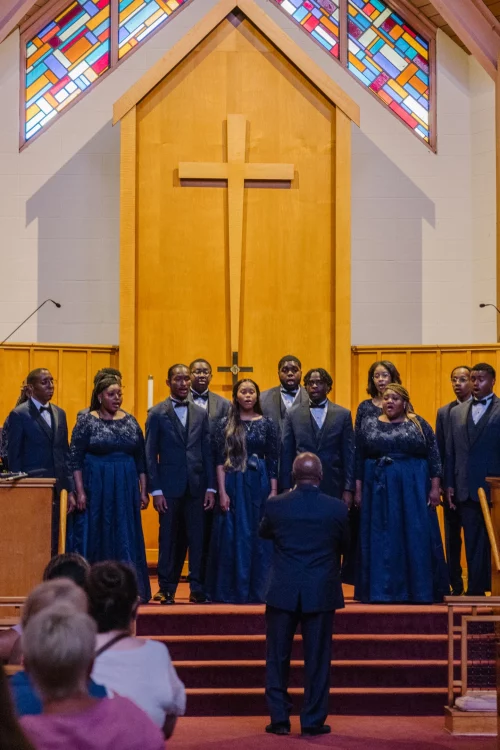
A hush fell over Ryman Auditorium, Nashville’s “Mother Church of Country Music.” On the same stage where Hank Williams wailed “I’m So Lonesome I Could Cry” and Patsy Cline wondered if she might be crazy, nine young African American singers entered from the wings, their voices blending in a mesmerizing, almost whispering rendition of the timeless slave song “Steal Away.”
“The trumpet sounds within my soul,” they sang, and you could almost hear that horn, muted and mournful. “I ain’t got long to stay here.”
On that night last fall, the Fisk Jubilee Singers—founded 151 years ago to raise money for the South’s oldest historically Black university—took hold of 2,000 hearts and, almost instantaneously, squeezed them to the point of tears.
Among the tearful was Paul Kwami, the group’s musical director for 28 years. A former Fisk University student himself, he came to Nashville after a childhood in Ghana.
“It happens sometimes,” he told me several months after that concert. “I’m crying, the singers are crying, we’re all crying.”
Now, everyone is crying again: Kwami, a legend in the preservation and performance of African American spiritual music, died unexpectedly September 10, less than a month before the group’s 151st anniversary.
Keep reading about the legacy of this musical group.
Check out our online galleries to learn more Black history.
Don’t leave without stopping by the breaking news section.
Comments Are Welcome
Note: We moderate submissions in order to create a space for meaningful dialogue, a space where museum visitors – adults and youth –– can exchange informed, thoughtful, and relevant comments that add value to our exhibits.
Racial slurs, personal attacks, obscenity, profanity, and SHOUTING do not meet the above standard. Such comments are posted in the exhibit Hateful Speech. Commercial promotions, impersonations, and incoherent comments likewise fail to meet our goals, so will not be posted. Submissions longer than 120 words will be shortened.
See our full Comments Policy here.