The Disturbing Truth About Hair Relaxers
Share
Explore Our Galleries









Breaking News!
Today's news and culture by Black and other reporters in the Black and mainstream media.
Ways to Support ABHM?
By Linda Villarosa, The New York Times
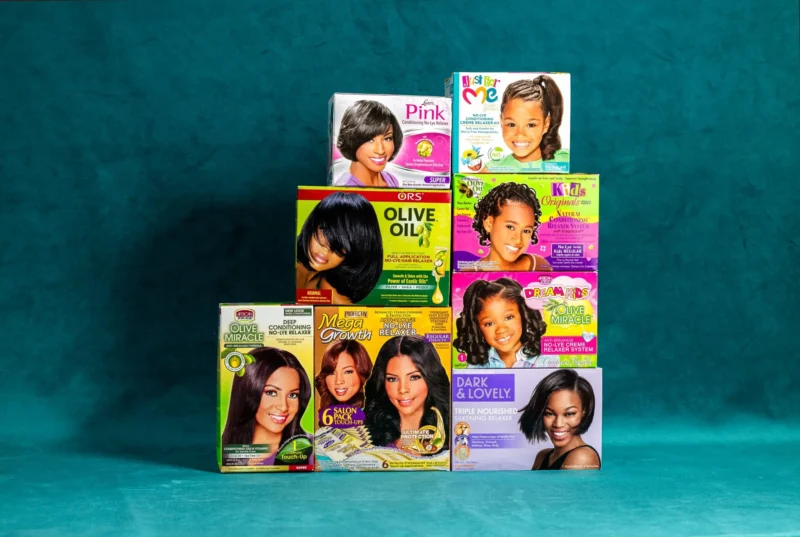
They’ve been linked to reproductive disorders and cancers. Why are they still being marketed so aggressively to Black women?
The phone rang incessantly in Dr. Tamarra James-Todd’s office at Harvard’s T.H. Chan School of Public Health. “I’m sorry,” she said, excusing herself for the third time. “It’s happening a lot,” she explained after pausing to take another call, “with the F.D.A. thing.”
James-Todd, an associate professor of environmental reproductive epidemiology, is a pioneer who has conducted or been a co-author of nearly 70 scientific investigations over the past 20 years to establish the connection between the chemicals in hair products that generations of Black women have used to straighten their hair and the reproductive-health racial disparities that scientists have struggled to explain for decades. And on that day last October, she was receiving calls because the Food and Drug Administration had announced a proposal for a ban on the use of formaldehyde as an ingredient in hair relaxers, citing its link to cancer and other long-term adverse health effects.
Her early and sustained interest has also inspired other scientists — most of them Black women like her — to add questions about the use of hair relaxers and other products to large longitudinal studies with tens of thousands of subjects as they pursue explanations for these racial disparities. The scientists are driven by their own intimate experience: As children, they sat in salon chairs or in kitchens having chemical relaxers, colloquially called “creamy crack,” applied to their hair as they waited for it to go from “kinky” to smooth and silky as the products promised. Decades later, they still recall the harsh smell and the sensation of their scalps being aflame. “I go all the way back to: I was right,” James-Todd said. “That stuff that was burning on my head — it wasn’t safe.”
The research has finally begun to bear fruit: A robust body of scientific evidence has now shown that straighteners and other hair products marketed to Black girls and women have been linked to endocrine-disrupting substances associated with the early onset of menstruation and many of the reproductive-health issues that follow, from uterine fibroids, preterm birth and infertility to breast, ovarian and uterine cancer. Many of these hormone-health-related problems are more common in Black women than in other women, including an aggressive form of breast cancer that contributes to a death rate from the disease that is 28 percent higher than the rate for white women.
Find more Breaking News here.
Explore our virtual exhibit galleries here.
Comments Are Welcome
Note: We moderate submissions in order to create a space for meaningful dialogue, a space where museum visitors – adults and youth –– can exchange informed, thoughtful, and relevant comments that add value to our exhibits.
Racial slurs, personal attacks, obscenity, profanity, and SHOUTING do not meet the above standard. Such comments are posted in the exhibit Hateful Speech. Commercial promotions, impersonations, and incoherent comments likewise fail to meet our goals, so will not be posted. Submissions longer than 120 words will be shortened.
See our full Comments Policy here.