The case against the Supreme Court of the United States
Share
Explore Our Galleries









Breaking News!
Today's news and culture by Black and other reporters in the Black and mainstream media.
Ways to Support ABHM?
By Ian Millhiser, VOX
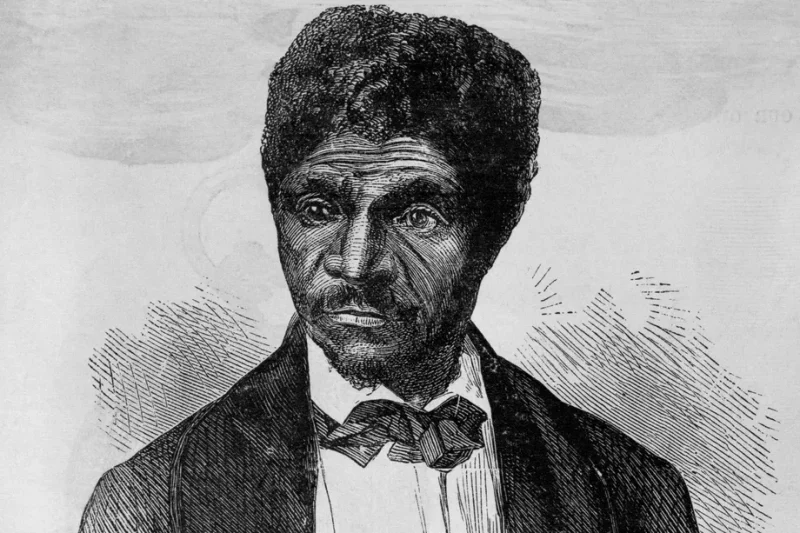
The Court was the midwife of Jim Crow, the right hand of union busters, the dead hand of the Confederacy, and now is one of the chief architects of America’s democratic decline.
Well, it’s done. Justice Samuel Alito has achieved a goal that he and his fellow Republicans have dreamed of for decades. Roe v. Wade is overruled. The constitutional right to an abortion no longer exists.
Alito’s decision in Dobbs v. Jackson Women’s Health Organization may literally be the worst-kept secret in the Court’s history. An early draft of his opinion leaked to Politico in early May, something that has never happened in the Court’s modern history. And even if this leak had never occurred, the death of Roe became inevitable the minute Republicans gained a 6-3 supermajority on the Court.
Meanwhile, the Supreme Court’s public approval ratings are in free fall. A Gallup poll taken in June before the Court’s decision in Dobbs found that only 25 percent of respondents have “a great deal” or “quite a lot” of confidence in the Court, a historic low. And that’s after nearly a year’s worth of polls showing the Court’s approval in steady decline.
To this I say, “good.” The Dobbs decision is the culmination of a decades-long effort by Republicans to capture the Supreme Court and use it, not just to undercut abortion rights but also to implement an unpopular agenda they cannot implement through the democratic process.
And the Court’s Republican majority hasn’t simply handed the Republican Party substantive policy victories. It is systematically dismantling voting rights protections that make it possible for every voter to have an equal voice, and for every political party to compete fairly for control of the United States government. Alito, the author of the opinion overturning Roe, is also the author of two important decisions dismantling much of the Voting Rights Act.
Keep reading to learn how SCOTUS was designed to favor conservatives.
Learn more about Jim Crow and the recent overturning of Roe vs Wade by SCOTUS.
You’ll find more news and analysis here.
Comments Are Welcome
Note: We moderate submissions in order to create a space for meaningful dialogue, a space where museum visitors – adults and youth –– can exchange informed, thoughtful, and relevant comments that add value to our exhibits.
Racial slurs, personal attacks, obscenity, profanity, and SHOUTING do not meet the above standard. Such comments are posted in the exhibit Hateful Speech. Commercial promotions, impersonations, and incoherent comments likewise fail to meet our goals, so will not be posted. Submissions longer than 120 words will be shortened.
See our full Comments Policy here.