Supreme Court Overturns Roe v. Wade, Eliminates Constitutional Right to Abortion
Share
Explore Our Galleries









Breaking News!
Today's news and culture by Black and other reporters in the Black and mainstream media.
Ways to Support ABHM?
By Brent Kendall and Jess Bravin, The Wall Street Journal
The court upholds law from Mississippi that bans abortion after 15 weeks, opens door to widespread prohibitions on the procedure
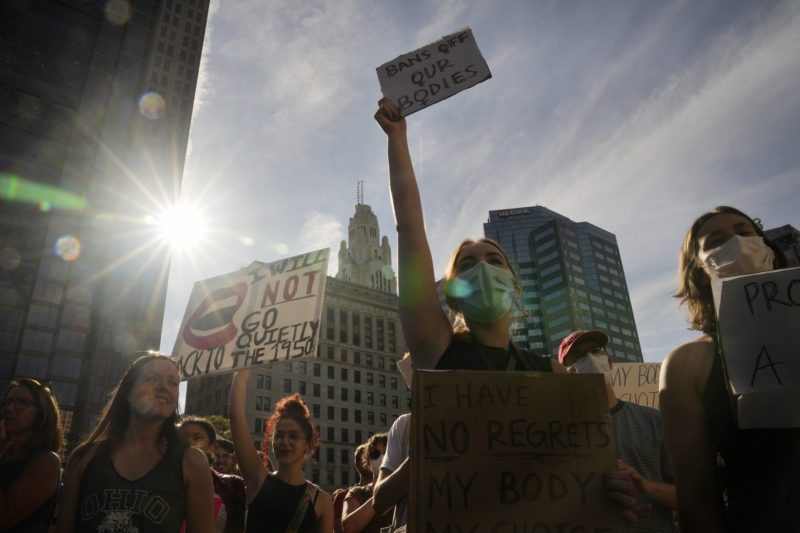
The Supreme Court eliminated the constitutional right to an abortion, overruling the 1973 Roe v. Wade decision and leaving the question of abortion’s legality to the states.
The court’s decision upheld a law from Mississippi that bans abortion after 15 weeks of pregnancy, roughly two months earlier than what has been allowed under Supreme Court precedent dating back to Roe.
In doing so, the court’s conservative majority said the Roe de cision was egregiously wrong in recognizing a constitutional right to an abortion, an error the court perpetuated in the decades since.
“The Constitution makes no reference to abortion, and no such right is implicitly protected by any constitutional provision,” Justice Samuel Alito wrote for the court.
“It is time to heed the Constitution and return the issue of abortion to the people’s elected representatives,” he wrote in his opinion in Dobbs v. Jackson Women’s Health Organization.
Learn more about this ruling.
Unfortunately, this was expected, in part because white women voters ignore Black women. Discover the barriers Black women face when seeking abortions.
Comments Are Welcome
Note: We moderate submissions in order to create a space for meaningful dialogue, a space where museum visitors – adults and youth –– can exchange informed, thoughtful, and relevant comments that add value to our exhibits.
Racial slurs, personal attacks, obscenity, profanity, and SHOUTING do not meet the above standard. Such comments are posted in the exhibit Hateful Speech. Commercial promotions, impersonations, and incoherent comments likewise fail to meet our goals, so will not be posted. Submissions longer than 120 words will be shortened.
See our full Comments Policy here.