The Birth Of ‘Dear White People’
Share
Explore Our Galleries









Breaking News!
Today's news and culture by Black and other reporters in the Black and mainstream media.
Ways to Support ABHM?
By Justin Simien, HuffingtonPost
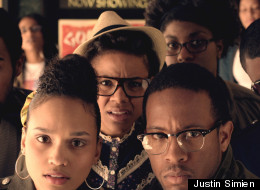
Perhaps it was being mistaken for the one other Black guy in my office by a colleague who had worked with him for years[…] Or perhaps it was being asked repeatedly by co-workers to teach them the Single Ladies Dance? Either way something provoked me to go on Twitter as @DearWhitePeople two years ago and start tweeting things like:
“Dear White People. The single ladies dance is dead. Please turn off your web cams and go on about your lives.”
Meant to articulate the sometimes funny, mostly harmless, but occasionally painful experience of being a Black face in a vastly white place (i.e. most Hollywood work environments) @DearWhitePeople also served an ulterior motive of mine.
I’d been working for some time on a satire about race identity. The feature script for Dear White People follows the events leading up to a race riot at a prestigious predominately white university through the perspectives of four very different Black students. While the script was culled from my own college experiences and those of others I knew, I wanted to test out the voice of my lead character, Sam White, whose radio show “Dear White People” gives the film its title.
Sam, a kind of amalgamation of Dap from School Daze and iconic activist Angela Davis had a lot to say and I wanted to know what resonated with people.
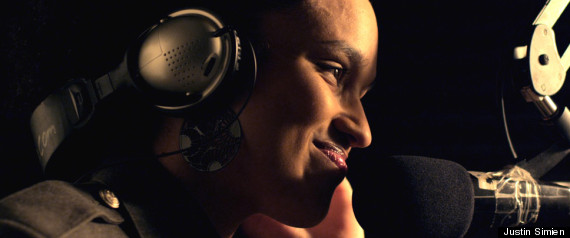
As I charged through several drafts of the script, feedback from the twitter account would make its way into the project. Tweets that asked how I would feel if there was a “Dear Black People” prompted responses such as:
“Dear White People, there’s no need for a Dear Black People. Reality shows on VH1 and Bravo let us know exactly how you feel about us.”
[…]
There are some defensive knee jerk reactions to the phrase “Dear White People” and I get it. No one wants to be called racist, and some folks are still waking up from the fantasy that having a Black president means America has somehow become “Post-Racial.” (By the way, if the “birther movement” and the tragedy involving Trayvon Martin hasn’t sobered you up yet, just check out the Youtube comments section for the Dear White People trailer).

The truth is, my film really isn’t about “white racism” or racism at all. As I see it racism is systemic and is inherently reflected in any honest story about life as a minority in this country. What my film is about however is identity. It’s about the difference between how the mass culture responds to a person because of their race and who they understand themselves to truly be. …
These impressions easily turn into the way I’m treated, the level of respect I’m given, expectations placed on me and in some cases opportunities denied. (I could expound, but that’s probably better served in a different post. Or better yet just read the brilliant “Who’s Afraid of Post-Black America” by Touré).
Culture is ubiquitous. From the time a person is born, television, movies, cliques in school and Abercrombie and Fitch ads subtlety suggest to them on a subconscious level who they should and should not be due to their race, gender, looks and sexual orientation (just to name a few). Identity is a powerful concept. It can open up potential and it can severely limit it.
While there are countless cultural cues for white men in particular being constantly fed to the culture, being a minority with ambition often means being the only minority in the room. And sometimes in my case patiently explaining that while I am a filmmaker who happens to be Black I have absolutely no desire to be the “next Tyler Perry.”
With the continued support for Dear White People, I sincerely hope to feed at least one more complex and nuanced story to the culture. And while I am truly humbled and overwhelmed by support for the project we’ve got a long way to go. …
Read full article Here
Read more Breaking News Here
Comments Are Welcome
Note: We moderate submissions in order to create a space for meaningful dialogue, a space where museum visitors – adults and youth –– can exchange informed, thoughtful, and relevant comments that add value to our exhibits.
Racial slurs, personal attacks, obscenity, profanity, and SHOUTING do not meet the above standard. Such comments are posted in the exhibit Hateful Speech. Commercial promotions, impersonations, and incoherent comments likewise fail to meet our goals, so will not be posted. Submissions longer than 120 words will be shortened.
See our full Comments Policy here.