Texas Mother Teaches Textbook Company a Lesson on Accuracy
Share
Explore Our Galleries









Breaking News!
Today's news and culture by Black and other reporters in the Black and mainstream media.
Ways to Support ABHM?
By Manny Fernandez and Christine Hauser, New York Times
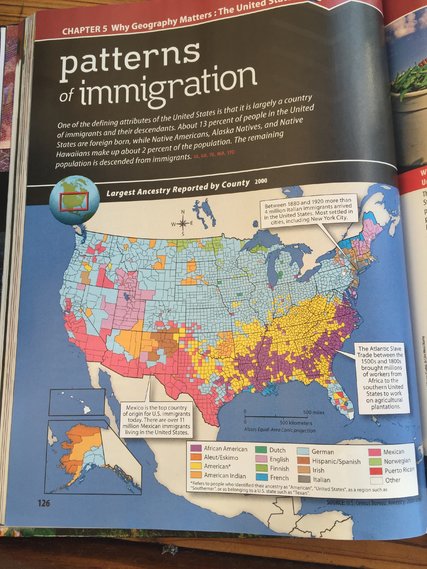
HOUSTON — Coby Burren, 15, a freshman at a suburban high school south of here, was reading the textbook in his geography class last week when a map of the United States caught his attention. On Page 126, a caption in a section about immigration referred to Africans brought to American plantations between the 1500s and 1800s as “workers” rather than slaves.
He reached for his cellphone and sent a photograph of the caption to his mother, Roni Dean-Burren, along with a text message: “we was real hard workers, wasn’t we.”
Their outrage over the textbook’s handling of the nation’s history of African-American slavery — another page referred to Europeans coming to America as “indentured servants” but did not describe Africans the same way — touched off a social-media storm that led the book’s publisher, McGraw-Hill Education, to vow to change the wording and the school’s teachers to use other materials in the class.
“It talked about the U.S.A. being a country of immigration, but mentioning the slave trade in terms of immigration was just off,” said Ms. Dean-Burren, who is black. “It’s that nuance of language. This is what erasure looks like.”
Ms. Dean-Burren cataloged her objections to the caption last week in posts on Facebook and Twitter. The posts, along with a video she made while flipping through the book, were widely shared, catching the attention of the #blacklivesmatter movement as the video alone reached nearly two million views.
Texas textbooks — and how they address aspects of history, science, politics and other subjects — have been a source of controversy for years in part because the state is one of the largest buyers of textbooks. In 2010, the Texas Board of Education approved a social-studies curriculum that put a conservative stamp on history and economics textbooks, including emphasizing Republican political achievements and movements. State-sanctioned textbooks have been criticized for passages suggesting Moses influenced the writing of the Constitution and dismissing the history of the separation of church and state.
Read the full article here.
Read more Breaking News here.
Comments Are Welcome
Note: We moderate submissions in order to create a space for meaningful dialogue, a space where museum visitors – adults and youth –– can exchange informed, thoughtful, and relevant comments that add value to our exhibits.
Racial slurs, personal attacks, obscenity, profanity, and SHOUTING do not meet the above standard. Such comments are posted in the exhibit Hateful Speech. Commercial promotions, impersonations, and incoherent comments likewise fail to meet our goals, so will not be posted. Submissions longer than 120 words will be shortened.
See our full Comments Policy here.