Tenement Museum to Feature a Black Family’s Apartment for the First Time
Share
Explore Our Galleries









Breaking News!
Today's news and culture by Black and other reporters in the Black and mainstream media.
Ways to Support ABHM?
By Lola Fadulu, New York Times
The museum has shared the stories of immigrants and migrants who lived in New York City in the 19th and 20th centuries for nearly four decades. For the first time, a Black family’s apartment will be included.
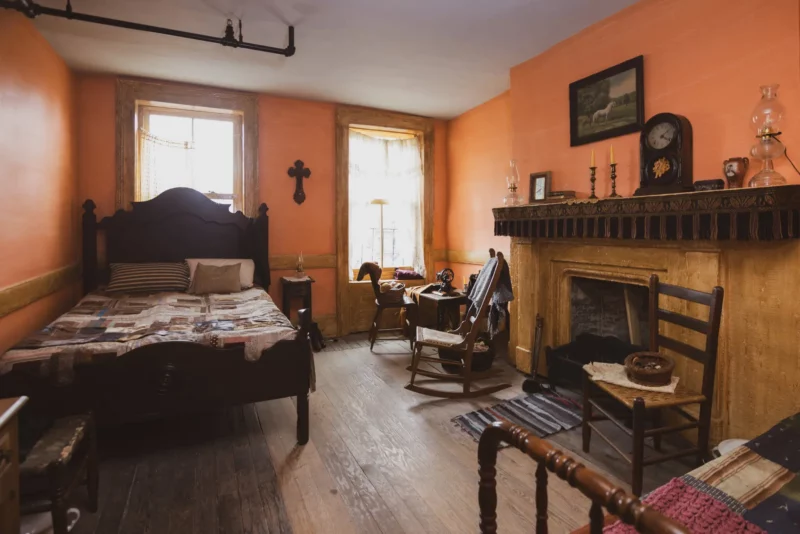
For the past 35 years, the Tenement Museum has told the stories of immigrants and migrants who lived in New York City in the 19th and 20th centuries to help visitors better understand the city through the lives of its working class.
For the first time in its history, the museum will soon feature the apartment of a Black family as a permanent exhibit.
“A Union of Hope,” the new exhibit in the Lower East Side museum, will include the recreated apartment of Joseph Moore, a coachman, and Rachel Moore, a housekeeper. The exhibit was supposed to open in 2022, but was delayed because of renovations to modernize the building. Limited tours begin on Dec. 26, and it will open completely in February.
The Tenement Museum has centered Black history in the past, including during walking tours and public talks, said Kat Lloyd, the museum’s vice president of programs and interpretation. But the families featured since the museum’s opening in 1988 have largely been immigrants and refugees from Europe. This is, in part, because the museum has focused on people who lived in the two buildings where the museum is located, Ms. Lloyd said.
But that’s changing.
“The most sort of glaring gap for us was the story of Black New Yorkers who lived in tenements,” Ms. Lloyd said. The new exhibit will help the organization achieve “this goal of restoring history and telling a fuller wider story.”
Learn about the Black experience through history in our online exhibits.
Comments Are Welcome
Note: We moderate submissions in order to create a space for meaningful dialogue, a space where museum visitors – adults and youth –– can exchange informed, thoughtful, and relevant comments that add value to our exhibits.
Racial slurs, personal attacks, obscenity, profanity, and SHOUTING do not meet the above standard. Such comments are posted in the exhibit Hateful Speech. Commercial promotions, impersonations, and incoherent comments likewise fail to meet our goals, so will not be posted. Submissions longer than 120 words will be shortened.
See our full Comments Policy here.