Survivors of Gangs and Gun Violence, These Women Now Help Others Navigate Grief
Share
Explore Our Galleries









Breaking News!
Today's news and culture by Black and other reporters in the Black and mainstream media.
Ways to Support ABHM?
By Cara Anthony, Kaiser Health News
As teens, these three women lived amid street gangs around East St Louis, Illinois. Now, as adults, they support the families who have lost loved ones to gun violence. And because of their past, some residents trust them more than they do the police.
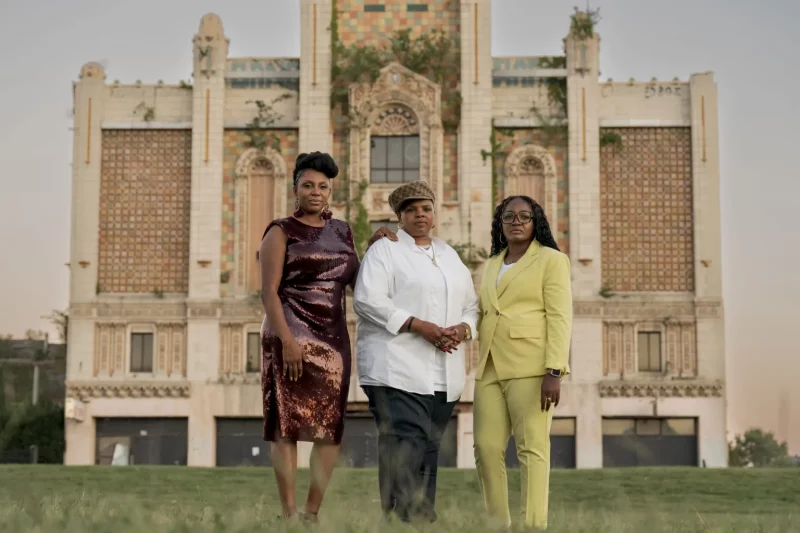
When April Roby-Bell joined the Gangster Disciples in middle school, the street gang treated her like family when she felt abandoned by her own. She was looking for love, acceptance, and stability.
“They trained us as little kids. How to own your ’hood, own your street: ‘This is my territory,’” Roby-Bell said.
The experience also taught her tough lessons about life and death at an early age. At least half of the friends she grew up with are now dead. “At times, it became hard because you just get tired of fighting,” she said. “I probably should have been dead a long time ago.”
At 42, Roby-Bell isn’t defending territory for a gang anymore. Instead, she is standing up for the families in the southern Illinois communities of East St. Louis and neighboring Washington Park who want their children to be able to go outside to play without fearing for their lives. As a survivor of the violence, Roby-Bell serves as a source of strength for others. Those traumatized by gun violence call her for counseling. She has planned funerals for victims. And, for years, she has presided over burials of both strangers and friends. She sleeps with her phone by her side, so she doesn’t miss a cry for help.
Nearby, Larita Rice-Barnes, 47, also carries a phone that doubles as a lifeline for grieving families. And Terra Jenkins, 50, receives similar calls. She typically checks her phone throughout the day, replying to messages from locals and nearby funeral homes.
As young women, all three ran with street gangs around East St. Louis and its surrounding communities. Today, Roby-Bell works for a school district mentoring high school students. Jenkins is an outreach leader for a local clinic, and Rice-Barnes is a published author who spends countless hours volunteering and running two nonprofits.
Still, their battle scars and faded tattoos recall their past. Because of those experiences on the front lines, some people trust them more than they do the police. The women fill in the gaps for a community fighting economic inequality, homelessness, health disparities, and gun violence.
Learn about Jenkins’ journey from gang member to filling those gaps.
Gang violence impacts people from all walks of life and geographic locations. Nonprofit and religious organizations offer an important alternative to policing.
More breaking news here.
Comments Are Welcome
Note: We moderate submissions in order to create a space for meaningful dialogue, a space where museum visitors – adults and youth –– can exchange informed, thoughtful, and relevant comments that add value to our exhibits.
Racial slurs, personal attacks, obscenity, profanity, and SHOUTING do not meet the above standard. Such comments are posted in the exhibit Hateful Speech. Commercial promotions, impersonations, and incoherent comments likewise fail to meet our goals, so will not be posted. Submissions longer than 120 words will be shortened.
See our full Comments Policy here.