More police, criminalization and gang suppression will not end homelessness in San Francisco
Share
Explore Our Galleries









Breaking News!
Today's news and culture by Black and other reporters in the Black and mainstream media.
Ways to Support ABHM?
By Maria Victoria Ahearne, San Francisco Bay View
“The End of Policing,” a new book by Alex Vitale, examines the histories and failures of policing policies and provides examples of alternatives that successfully divest from dependence on police while strengthening the community. Vitale’s chapters on criminalizing homelessness and gang suppression in particular can be a useful tool in revealing ineffective policies in effect today in San Francisco.
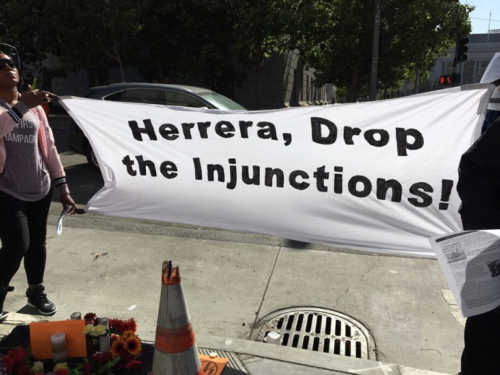
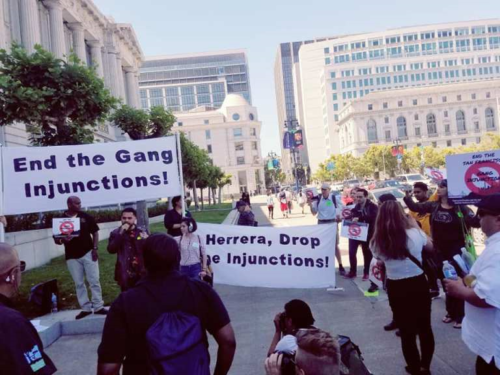
Gang suppression is attempted through gang injunctions ordered by San Francisco District Attorney Dennis Herrera on youth residing in low-income, predominantly Black and Latino neighborhoods. These are the modern Black Codes of the Bayview Hunters Point, Visitacion Valley, Fillmore-Western Addition and Mission districts.
Criminalizing homelessness is sanctioned by policies known as the 36 “quality of life laws” imposed by police on unsheltered residents. These policies are proving not to be successful, assuming success is measured in reducing crime and homelessness.
The data collected, when available, proves policing to not only be ineffective financially but also exposes glaring racial disparities. The researchers producing recent data recommend alternatives to policing, as does Vitale. In order for communities to have a chance to thrive, government policies must be data-driven, with racial justice at its developmental epicenter along with transparency and community oversight.
The highest peaks of aggressive policing are historically paired with the inequality of wealth. Most notably are the policing policies following an economic collapse.
Read the full article here.
Read more Breaking News here.
View galleries from the ABHM here.
Comments Are Welcome
Note: We moderate submissions in order to create a space for meaningful dialogue, a space where museum visitors – adults and youth –– can exchange informed, thoughtful, and relevant comments that add value to our exhibits.
Racial slurs, personal attacks, obscenity, profanity, and SHOUTING do not meet the above standard. Such comments are posted in the exhibit Hateful Speech. Commercial promotions, impersonations, and incoherent comments likewise fail to meet our goals, so will not be posted. Submissions longer than 120 words will be shortened.
See our full Comments Policy here.