Surviving gun violence does not end victims’ pain and trauma
Share
Explore Our Galleries









Breaking News!
Today's news and culture by Black and other reporters in the Black and mainstream media.
Ways to Support ABHM?
By Curtis Bunn, NBC
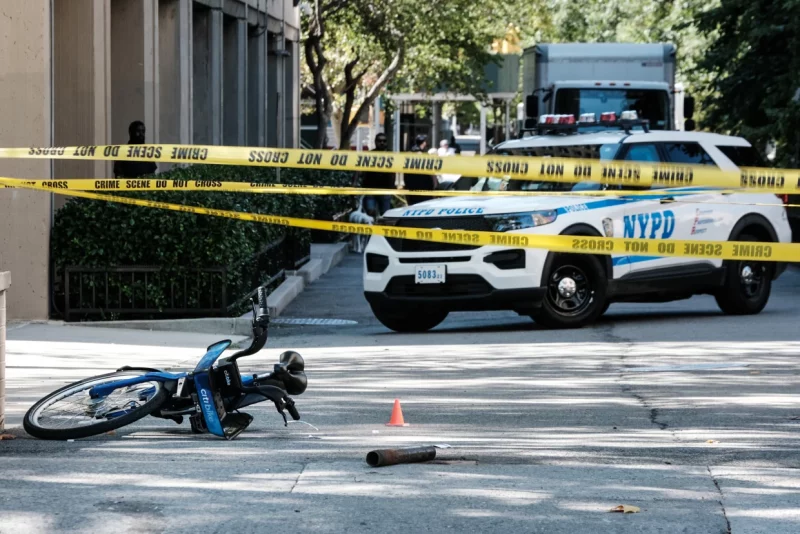
In March 2020, Devon Gipson was shot five times in a drive-by shooting two houses down from his grandmother’s home in South Los Angeles. The mother of his daughter was shot in the leg, and a friend was killed.
Gipson, who works stocking supplies at a contractor warehouse, considers it a miracle that he survived the gunshot wounds to his shoulder, back, arm and body. As he recovered, Gipson learned that healing physically was only a small part of the process.
A few months after the shooting, he started becoming paranoid about his surroundings and couldn’t sleep. He also said watching a scene of a drive-by shooting on television gave him an unexpected reaction.
“And I was fine at first,” Gipson, 35, recalled. “And then I started having a panic attack. I couldn’t breathe. So, I got up and went outside to try to get some air. I was walking in circles, like a dog trying to catch its tail. It felt like I was struggling to breathe for two hours. In reality, it was about 15 or 20 minutes. I was like, ‘Oh, man. I’m still in that moment that happened to me.’”
Although data shows gun violence is down 4% from last year, that violence still disproportionately affects the Black community. Gipson’s reaction to being shot, like many others in the Black community, isn’t uncommon. His trauma speaks to the dire need for post-care counseling and the importance of it in cities experiencing gun violence.
Hospital programs like Healing Hurt People in Philadelphia — where 84% of the victims of gun violence are Black, according to the city’s Office of the Controller — and Chicago’s Shirley Ryan AbilityLab are dedicated to providing psychological aftercare to victims of gun violence.
It is an area that psychologists say gets too little emphasis, considering the high number of gunshot-wound survivors. For every gun-related homicide, there are more than two nonfatal gun shootings, according to the Educational Fund to Stop Gun Violence. It also says that 9 in 10 survivors of gun violence experienced trauma from being shot. Additionally, the data shows that residents of the poorest neighborhoods are 6.9 times more likely to be victims of gun violence than those in better-off areas.
You’ll want to finish this important article about the trauma from gun violence.
Philly has also been the site of a program by Black men to reduce gun violence.
Before you leave, stop by ABHM’s breaking news.
Comments Are Welcome
Note: We moderate submissions in order to create a space for meaningful dialogue, a space where museum visitors – adults and youth –– can exchange informed, thoughtful, and relevant comments that add value to our exhibits.
Racial slurs, personal attacks, obscenity, profanity, and SHOUTING do not meet the above standard. Such comments are posted in the exhibit Hateful Speech. Commercial promotions, impersonations, and incoherent comments likewise fail to meet our goals, so will not be posted. Submissions longer than 120 words will be shortened.
See our full Comments Policy here.