Supreme Court Ruling Presents Challenges for Innocent Federal Prisoners
Share
Explore Our Galleries









Breaking News!
Today's news and culture by Black and other reporters in the Black and mainstream media.
Ways to Support ABHM?
By Stacy M. Brown, The Washington Informer
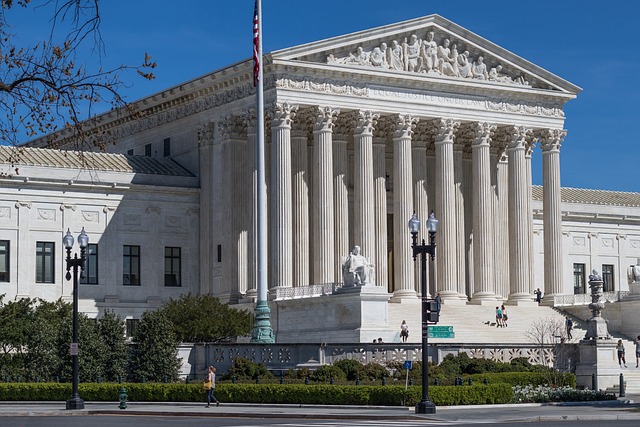
In a 6-3 decision, the Supreme Court delivered a blow to the rights of federal prisoners, particularly those who may be completely innocent.
This week’s ruling in Jones v. Hendrix establishes a significant hurdle for prisoners seeking to challenge their convictions in court.
The case revolved around Marcus DeAngelo Jones, a federal prisoner convicted in 2000 of possessing a firearm after a felony conviction.
However, in a 2019 case called Rehaif v. United States, the Supreme Court declared that individuals could not be convicted under the felon-in-possession statute unless they were aware of their prior felony conviction at the time of possessing the gun.
Jones argued that he mistakenly believed his previous felony conviction had been expunged when he acquired the firearm, rendering his conviction invalid under Rehaif.
He said because he was unaware of his felony status, federal law did not make his possession of the firearm illegal.
Unfortunately, the Supreme Court’s ruling, as outlined in Justice Thomas’s opinion, prevents Jones from challenging his conviction altogether.
The outcome is because of a federal law known as Section 2255, which generally bars federal prisoners from making multiple challenges to their convictions or sentences.
Learn more about this case and its implications.
Some people believe that the Supreme Court has outlived its usefulness.
More breaking news here.
Comments Are Welcome
Note: We moderate submissions in order to create a space for meaningful dialogue, a space where museum visitors – adults and youth –– can exchange informed, thoughtful, and relevant comments that add value to our exhibits.
Racial slurs, personal attacks, obscenity, profanity, and SHOUTING do not meet the above standard. Such comments are posted in the exhibit Hateful Speech. Commercial promotions, impersonations, and incoherent comments likewise fail to meet our goals, so will not be posted. Submissions longer than 120 words will be shortened.
See our full Comments Policy here.