Study Supports Suspicion That Police Are More Likely to Use Force on Blacks
Share
Explore Our Galleries









Breaking News!
Today's news and culture by Black and other reporters in the Black and mainstream media.
Ways to Support ABHM?
By
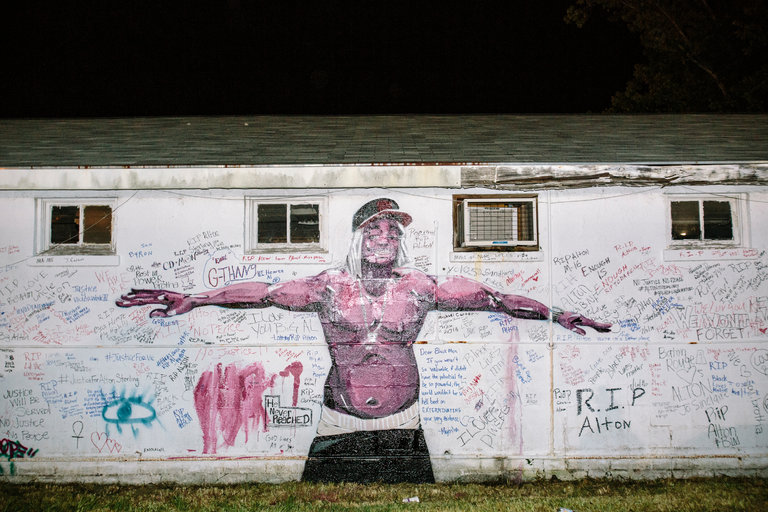
In Baton Rouge, La., a memorial to Alton Sterling, who was fatally shot by the police on Tuesday. Credit William Widmer for The New York Times
The vast majority of interactions between police officers and civilians end routinely, with no one injured, no one aggrieved and no one making the headlines. But when force is used, a new study has found, the race of the person being stopped by officers is significant.
The study of thousands of use-of-force episodes from police departments across the nation has concluded what many people have long thought, but which could not be proved because of a lack of data: African-Americans are far more likely than whites and other groups to be the victims of use of force by the police, even when racial disparities in crime are taken into account.
The report, to be released Friday by the Center for Policing Equity, a New York-based think tank, took three years to assemble and largely refutes explanations from some police officials that blacks are more likely to be subjected to police force because they are more frequently involved in criminal activity.
The researchers said they did not gather enough data specifically related to police shootings to draw conclusions on whether there were racial disparities when it came to the fatal confrontations between officers and civilians so in the news….
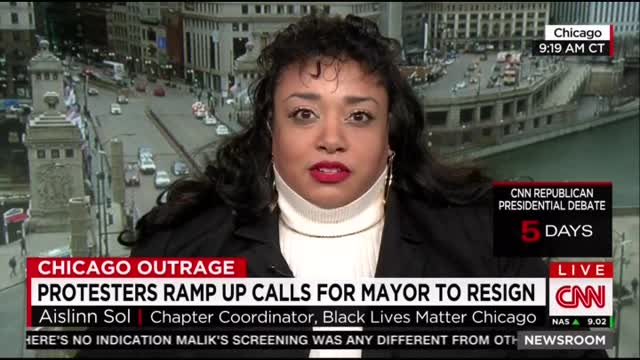
Aislinn Sol, a leader of the Black Lives Matter movement in Chicago.
African-American activists who have demanded greater police accountability since the 2014 fatal police shooting of Michael Brown in Ferguson, Mo., set off days of rioting, said Thursday that the study was critical to the conversation, but far from surprising.
“It’s kind of like, ‘Is water wet?’” said Aislinn Sol, organizer of the Chicago chapter of Black Lives Matter. “But what we gain with each study, each new piece of information is that we are able to win people over who are on the fence. The evidence is becoming overwhelming and incontrovertible that it is a systemic problem, rather than an isolated one.”…
The study found that the overall mean use-of-force rate for all black residents was 273 per 100,000, which is 3.6 times higher than the rate for white residents (76 per 100,000) and 2.5 times higher than the overall rate of 108 per 100,000 for all residents.
For those who were arrested, the mean rate of use of force against blacks was 46 for every 1,000 arrests, compared with 36 per 1,000 for whites….
Read the full article here.
More Breaking News here.
Comments Are Welcome
Note: We moderate submissions in order to create a space for meaningful dialogue, a space where museum visitors – adults and youth –– can exchange informed, thoughtful, and relevant comments that add value to our exhibits.
Racial slurs, personal attacks, obscenity, profanity, and SHOUTING do not meet the above standard. Such comments are posted in the exhibit Hateful Speech. Commercial promotions, impersonations, and incoherent comments likewise fail to meet our goals, so will not be posted. Submissions longer than 120 words will be shortened.
See our full Comments Policy here.