Study Examines Why Black Americans Remain Scarce in Executive Suites
Share
Explore Our Galleries









Breaking News!
Today's news and culture by Black and other reporters in the Black and mainstream media.
Ways to Support ABHM?
By
A new report, “Being Black in Corporate America,” outlines why diversity and inclusion efforts are falling short for African-American professionals.
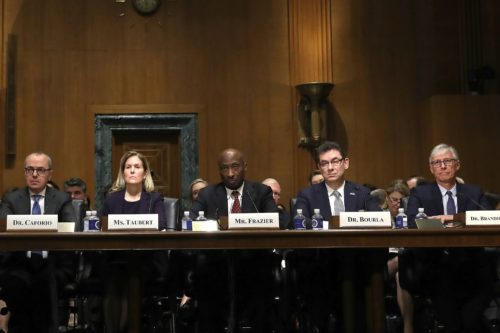
It is no secret that the corporate world has a diversity problem. A company where everyone brings fresh and exciting ideas to the table and has an equal opportunity to succeed is the dream for many executives, and a lack of diversity in the top ranks consistently places high on the list of roadblocks keeping that dream from being realized.
When it comes to African-Americans in the corporate world, the situation looks especially grim. Only four companies in the Fortune 500 — Merck & Co., TIAA, Tapestry and Lowe’s — now have a black chief executive, down from seven less than a decade ago.
Experts are scratching their heads about why corporate efforts to bring more women into the executive ranks have made progress in recent years, while increased racial diversity has remained stubbornly out of reach. But a new report makes clear that current methods are either accomplishing too little or are not working at all.
The report, “Being Black in Corporate America,” comes from the Center for Talent Innovation, a nonprofit group that is focused on workplace diversity and is sponsored by large companies including Morgan Stanley, Pfizer and Disney. The center surveyed 3,736 full-time professionals of all races, and found that today’s diversity and inclusion efforts are failing African-American professionals…
Read more here.
Find more Breaking News here.
Comments Are Welcome
Note: We moderate submissions in order to create a space for meaningful dialogue, a space where museum visitors – adults and youth –– can exchange informed, thoughtful, and relevant comments that add value to our exhibits.
Racial slurs, personal attacks, obscenity, profanity, and SHOUTING do not meet the above standard. Such comments are posted in the exhibit Hateful Speech. Commercial promotions, impersonations, and incoherent comments likewise fail to meet our goals, so will not be posted. Submissions longer than 120 words will be shortened.
See our full Comments Policy here.