Stephen A. Smith’s Non-Apology ‘Apology’
Share
Explore Our Galleries









Breaking News!
Today's news and culture by Black and other reporters in the Black and mainstream media.
Ways to Support ABHM?
By Keith Boykin, Word in Black
His comparison of Trump’s legal issues to the struggles of Black people shows influential Black folks must educate, not just entertain.
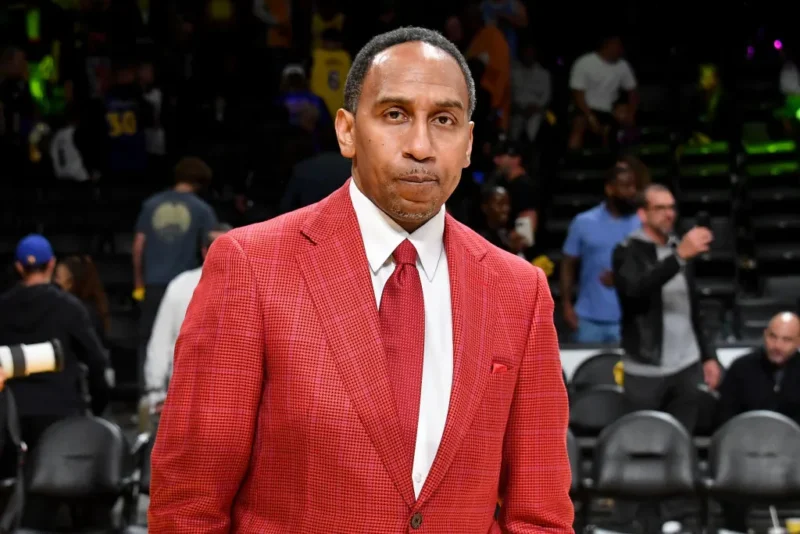
Stephen A. Smith has apologized for remarks last week suggesting that Trump was receiving support from the Black community because we relate to his legal woes.
“A lot of folks in Black America seem pretty pissed at me right now,” said the controversial ESPN host. “For that, I sincerely apologize.”
But it wasn’t really an apology.
Smith claimed that his words were “misconstrued, “taken out of context,” and misrepresented him in a way that he found “every bit as insulting and disrespectful as folks in Black America evidently felt about what they thought I said.”
[…]
Smith appeared on the Fox News “Hannity” show on April 18 and discussed Trump’s claim that “Black folks find him relatable because what he is going through is similar to what Black Americans have gone through.” Trump “wasn’t lying,” Smith said. “He was telling the truth.”
“When you see the law…being exercised against him, it is something that Black folks throughout this nation can relate to with some of our historic, iconic figures,” Smith told Fox News viewers.
[…]
Of course, Black people were upset. It’s insulting that Smith seems to compare Trump’s four criminal indictments and 88 felony charges to the legal attacks on iconic Black historical figures, presumably including people like Marcus Garvey, Rosa Parks, Martin Luther King, Jr., and Angela Davis, who were targeted by law enforcement because they were fighting for Black people.
Trump, on the other hand, is facing two criminal cases for fighting against Black people by trying to throw out millions of Black votes in Atlanta, Detroit, Philadelphia, and other cities with large Black populations in states he lost in 2020.
Continue the article here.
Learn about the Civil Rights Era and the heroic figures who fought for racial justice.
Read about Trump’s racist comments towards Black voters and those who defend him.
Find more breaking news.
Comments Are Welcome
Note: We moderate submissions in order to create a space for meaningful dialogue, a space where museum visitors – adults and youth –– can exchange informed, thoughtful, and relevant comments that add value to our exhibits.
Racial slurs, personal attacks, obscenity, profanity, and SHOUTING do not meet the above standard. Such comments are posted in the exhibit Hateful Speech. Commercial promotions, impersonations, and incoherent comments likewise fail to meet our goals, so will not be posted. Submissions longer than 120 words will be shortened.
See our full Comments Policy here.