Special News Series: Rising Up For Justice! – US economist proposes $12 trillion in slavery reparations
Share
Explore Our Galleries









Breaking News!
Today's news and culture by Black and other reporters in the Black and mainstream media.
Ways to Support ABHM?
Introduction To This Series:
This post is one installment in an ongoing news series: a “living history” of the current national and international uprising for justice.
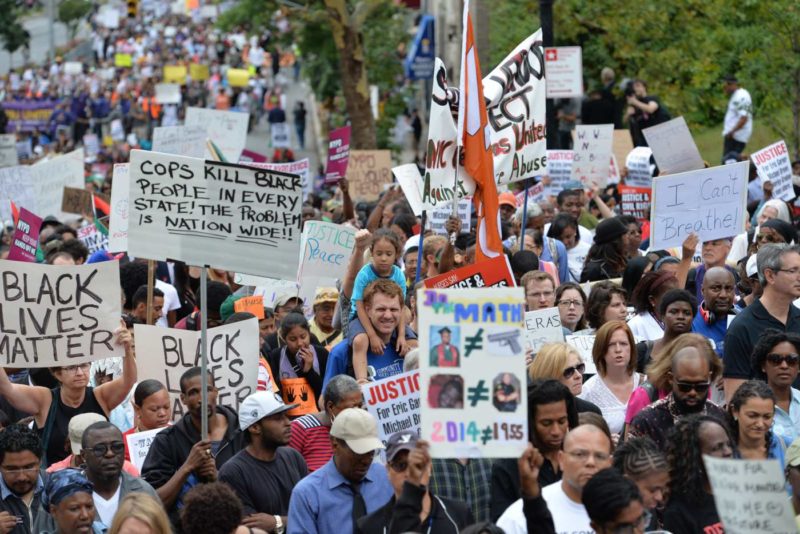
Today’s movement descends directly from the many earlier civil rights struggles against repeated injustices and race-based violence, including the killing of unarmed Black people. The posts in this series serve as a timeline of the uprising that began on May 26, 2020, the day after a Minneapolis police officer killed an unarmed Black man, George Floyd, by kneeling on his neck. The viral video of Floyd’s torturous suffocation brought unprecedented national awareness to the ongoing demand to truly make Black Lives Matter in this country.
The posts in this series focus on stories of the particular killings that have spurred the current uprising and on the protests taking place around the USA and across the globe. Sadly, thousands of people have lost their lives to systemic racial, gender, sexuality, judicial, and economic injustice. The few whose names are listed here represent the countless others lost before and since. Likewise, we can report but a few of the countless demonstrations for justice now taking place in our major cities, small towns, and suburbs.
To view the entire series of Rising Up for Justice! posts, insert “rising up” in the search bar above.
US economist proposes $12 trillion in slavery reparations to eliminate black-white wealth gap
‘The present moment seems to afford more of an opportunity to move forward’
By Louise Hall, Independent
August 14, 2020
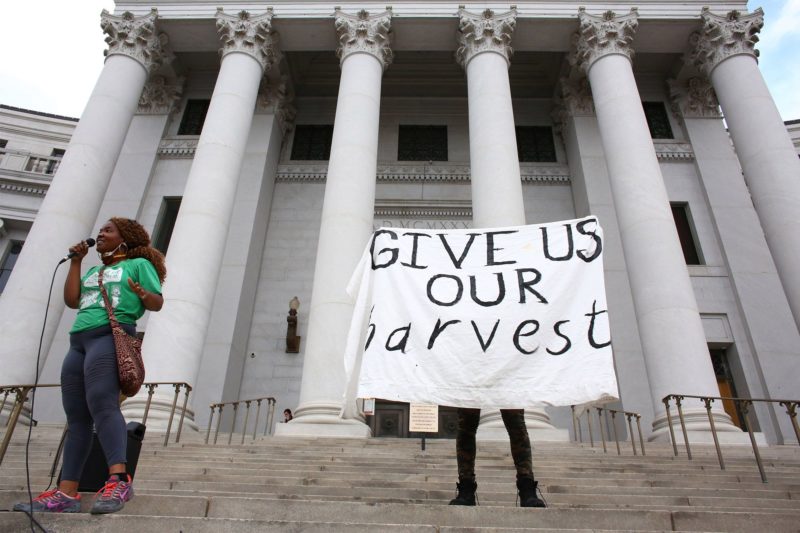
A renowned economist has said that $12 trillion should be afforded to black Americans in reparation for slavery to help the close wealth gap.
Duke University professor, William Darity Jr, and writer, Kirsten Mullen, jointly published a report for The Roosevelt Institute, an American liberal think tank, laying out a case for slavery reparations.
Prof Darity and Ms Mullen outline that to eliminate the existing Black-White wealth gap an allocation of between $10 trillion and $12 trillion, or about $800,000 per black household, should be paid.
The report says that the “US government—the culpable party—must pay the debt”.
“Ultimately, respect for black Americans as people and as citizens—and acknowledgement, redress, and closure for the history and financial hardship they have endured—requires monetary compensation,” the report reads.
The proposal comes as the demand for consideration of the case for reparations resurfaces across the county amidst ongoing national civil unrest following the death of George Floyd.
Over 140 members of congress have to date co-signed the Commission to Study and Develop Reparation Proposals for African-Americans Act, which was introduced into the house in March.
Only two members signed the bill when it was proposed in 2014, the broadcaster reported.
Prof Darity told CNBC: “the present moment seems to afford more of an opportunity to move forward than any moment I’ve experienced in my lifetime.”
Read the full article here.
Comments Are Welcome
Note: We moderate submissions in order to create a space for meaningful dialogue, a space where museum visitors – adults and youth –– can exchange informed, thoughtful, and relevant comments that add value to our exhibits.
Racial slurs, personal attacks, obscenity, profanity, and SHOUTING do not meet the above standard. Such comments are posted in the exhibit Hateful Speech. Commercial promotions, impersonations, and incoherent comments likewise fail to meet our goals, so will not be posted. Submissions longer than 120 words will be shortened.
See our full Comments Policy here.