Special News Series: Rising Up For Justice! – In a year of BLM protests, Dutch wrestle (again) with the tradition of Black Pete
Share
Explore Our Galleries









Breaking News!
Today's news and culture by Black and other reporters in the Black and mainstream media.
Ways to Support ABHM?
Introduction To This Series:
This post is one installment in an ongoing news series: a “living history” of the current national and international uprising for justice.
Today’s movement descends directly from the many earlier civil rights struggles against repeated injustices and race-based violence, including the killing of unarmed Black people. The posts in this series serve as a timeline of the uprising that began on May 26, 2020, the day after a Minneapolis police officer killed an unarmed Black man, George Floyd, by kneeling on his neck. The viral video of Floyd’s torturous suffocation brought unprecedented national awareness to the ongoing demand to truly make Black Lives Matter in this country.
The posts in this series focus on stories of the particular killings that have spurred the current uprising and on the protests taking place around the USA and across the globe. Sadly, thousands of people have lost their lives to systemic racial, gender, sexuality, judicial, and economic injustice. The few whose names are listed here represent the countless others lost before and since. Likewise, we can report but a few of the countless demonstrations for justice now taking place in our major cities, small towns, and suburbs.

To view the entire series of Rising Up for Justice! posts, insert “rising up” in the search bar above.
In a year of Black Lives Matter protests, Dutch wrestle (again) with the tradition of Black Pete
By Ayanna Thompson and Coen Heijes, The Conversation
December 3, 2020
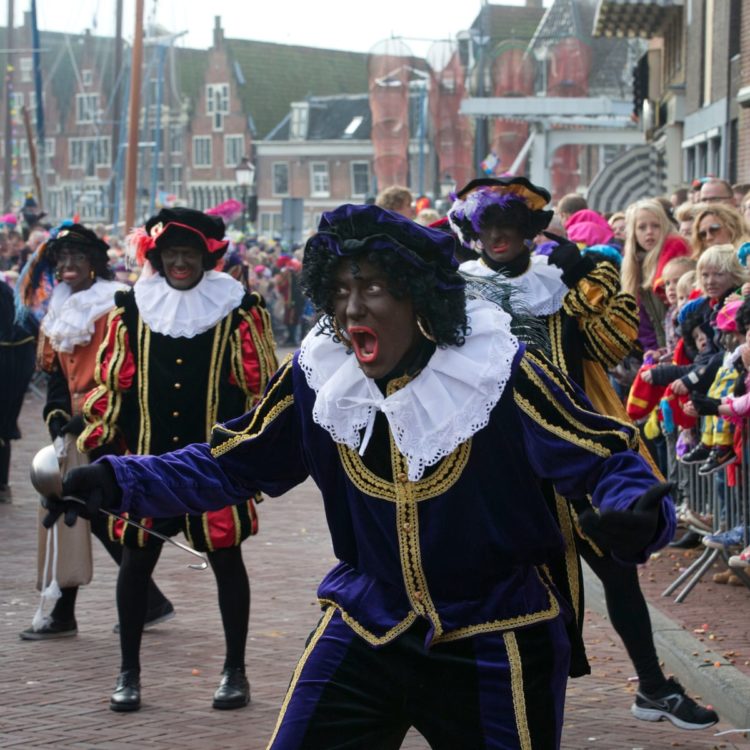
performed by a white adult in black face.
As Black Lives Matter protests and social uprisings spread across U.S. cities in the summer, the civil rights icon the Rev. Jesse Jackson wrote a personal letter to Dutch Prime Minister Mark Rutte over an annual tradition that many believe to be racist.
Every Dec. 5, people across the Netherlands paint their faces black and don afro wigs to celebrate the arrival of Black Pete, the blackface servant of St. Nicholas who helps to deliver presents.
With conversations about racial justice, systemic racism and anti-Black prejudice gaining fresh impetus worldwide, Jackson took issue with the Dutch leader’s defense of the Black Pete tradition.
“Your Excellency,” he wrote, “as the whole world mourns the brutal murder of George Floyd, followed by the worldwide mass protest demonstrations calling for actions to combat racism, I do not think that it was appropriate for you to explain that you understand better the sufferings of Black people … and that you do not consider Black Pete as racist.”
As scholars who have researched blackface in the U.S., the Netherlands and worldwide, we believe the episode captures the evolving though ambivalent Dutch attitudes to Black Pete, and the need for a larger global reckoning regarding blackface performances in general.
In his letter, Jackson argued that the tradition of Black Pete could not “be separated from the very offensive tradition of blackface” and noted that the Rev. Martin Luther King Jr. recognized that “there are times when it’s appropriate to be political, but sometimes it’s more important to be prophetic – to just do what’s right.”
Read the full article here.
More Breaking News here.
Explore the ABHM galleries here.
Comments Are Welcome
Note: We moderate submissions in order to create a space for meaningful dialogue, a space where museum visitors – adults and youth –– can exchange informed, thoughtful, and relevant comments that add value to our exhibits.
Racial slurs, personal attacks, obscenity, profanity, and SHOUTING do not meet the above standard. Such comments are posted in the exhibit Hateful Speech. Commercial promotions, impersonations, and incoherent comments likewise fail to meet our goals, so will not be posted. Submissions longer than 120 words will be shortened.
See our full Comments Policy here.
For most of my life, it seems that whites are the most wicked beings on this planet.