Special News Series: Rising Up For Justice! – How the Black Lives Matter generation remembers John Lewis
Share
Explore Our Galleries









Breaking News!
Today's news and culture by Black and other reporters in the Black and mainstream media.
Ways to Support ABHM?
Introduction To This Series:
This post is one installment in an ongoing news series: a “living history” of the current national and international uprising for justice.
Today’s movement descends directly from the many earlier civil rights struggles against repeated injustices and race-based violence, including the killing of unarmed Black people. The posts in this series serve as a timeline of the uprising that began on May 26, 2020, the day after a Minneapolis police officer killed an unarmed Black man, George Floyd, by kneeling on his neck. The viral video of Floyd’s torturous suffocation brought unprecedented national awareness to the ongoing demand to truly make Black Lives Matter in this country.
The posts in this series focus on stories of the particular killings that have spurred the current uprising and on the protests taking place around the USA and across the globe. Sadly, thousands of people have lost their lives to systemic racial, gender, sexuality, judicial, and economic injustice. The few whose names are listed here represent the countless others lost before and since. Likewise, we can report but a few of the countless demonstrations for justice now taking place in our major cities, small towns, and suburbs.
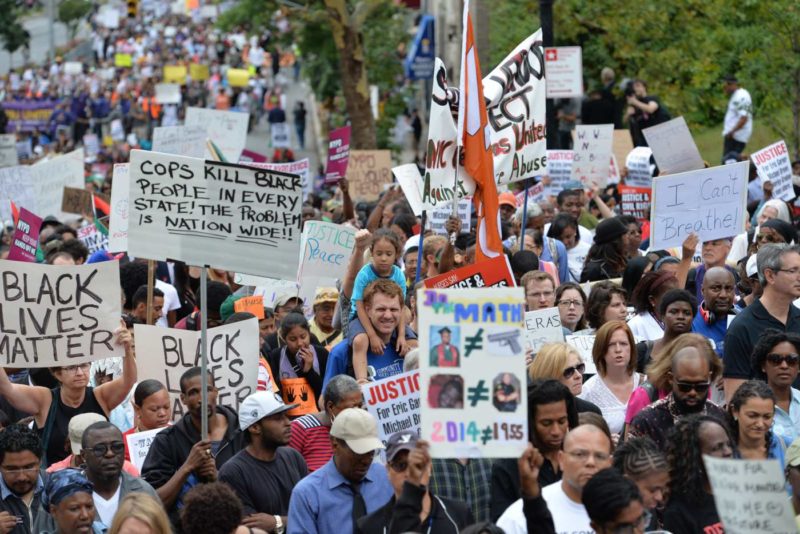
To view the entire series of Rising Up for Justice! posts, insert “rising up” in the search bar above.
How the Black Lives Matter generation remembers John Lewis
By Aaron Moorison, Associated Press
July 19, 2020
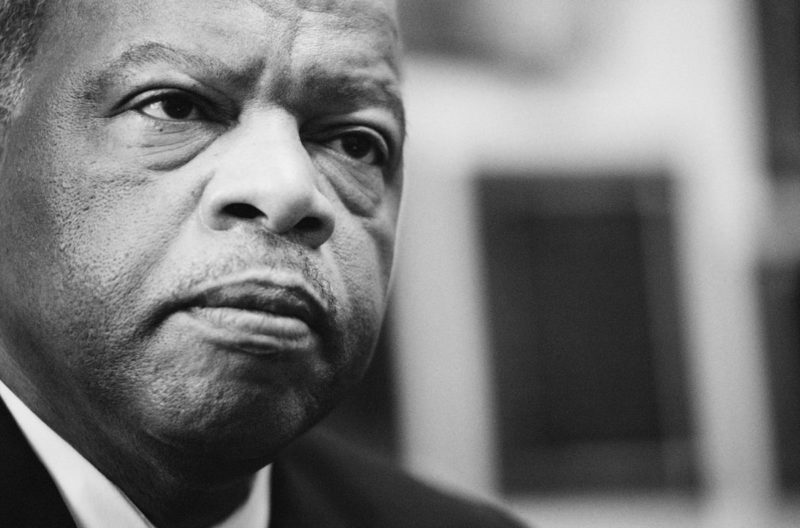
(Photo by Rebecca Roth/CQ Roll Call via Getty Images)
Of all the ways that John Lewis influenced American life and politics, his indelible impact on young people may be among the most enduring. From student activist to elder statesman, Lewis continually encouraged the nation’s youth to start “good trouble” — and modeled just how to do that.
He was arrested alongside millennial activists pushing for comprehensive reform of U.S. immigration laws in 2013. He led a sit-in in the House of Representatives over gun control following a mass shooting at an LGBTQ nightclub in Orlando in 2016. And when he was not protesting, he was helping young people understand history, as when he cosplayed as his younger self at San Diego’s Comic-Con to celebrate the release of his Selma, Alabama-themed graphic novel series in 2015.
Lewis, the Black civil rights icon who some called the “conscience of Congress,” died Friday.
In one of his last public appearances, he posed for a picture in June, standing on the Black Lives Matter Plaza mural painted just outside of the White House amid nationwide protests over the death of George Floyd.
For the Black Lives Matter generation, the connection to Lewis is deeper than many may realize. As a young man, through clouds of teargas and a hail of billy clubs, Lewis nearly lost his life marching against segregation and for voting rights. As a Georgia congressman, Lewis was generous with his time, taking meetings and sharing stages with activists who, from Sanford, Florida, to Ferguson, Missouri, Baltimore to Minneapolis, also withstood teargas — as well as rubber bullets, pepper spray and arrests — in their own protests against racism.
“He didn’t have to stand with us, he chose to,” Malkia Devich Cyril, the founder and senior fellow of MediaJustice, which advocates for open and democratic media and technology platforms, told The Associated Press. “That’s real leadership.”
In exclusive interviews with the AP, prominent organizers from the Black Lives Matter movement reflected on Lewis’ example and his kinship with their generation:
BRITTANY PACKNETT CUNNINGHAM, Ferguson activist and educator:
“I remember sitting on the other side of President Obama from (Lewis) at this pretty historic, multigenerational civil rights meeting, and understanding the optical placement of the generations in that moment. And I just kept thinking to myself, do not let John Lewis down. … I was finally able to thank him, face to face, eye to eye, for treading the path my generation was now walking. … With kindness in his eyes and determination in his voice, he reminded me that the road to freedom is never easy — and that’s precisely why we have to keep taking it. ‘You’ll have setbacks,’ he told me. ‘Keep going. Be consistent. You will get there.’”
PHILLIP AGNEW, co-founder of the Dream Defenders, a police and prison abolition group, and organizer in the Movement for Black Lives:
“I think the first time I ever met him was at (Congressional Black Caucus Foundation), the legislative forum that they have every year. This is kind of after Dream Defenders had taken over the Capitol of Florida, and there was a big buzz about our little fledgling group at that time. I didn’t think that he would know who I was — I absolutely knew who he was. … And I remember him coming and speaking to me and saying how proud he was, looking at the things that we had done in Florida.”
Comments Are Welcome
Note: We moderate submissions in order to create a space for meaningful dialogue, a space where museum visitors – adults and youth –– can exchange informed, thoughtful, and relevant comments that add value to our exhibits.
Racial slurs, personal attacks, obscenity, profanity, and SHOUTING do not meet the above standard. Such comments are posted in the exhibit Hateful Speech. Commercial promotions, impersonations, and incoherent comments likewise fail to meet our goals, so will not be posted. Submissions longer than 120 words will be shortened.
See our full Comments Policy here.