Special News Series: Rising Up for Justice! – Congress approves bill to make Juneteenth a federal holiday
Share
Explore Our Galleries









Breaking News!
Today's news and culture by Black and other reporters in the Black and mainstream media.
Ways to Support ABHM?
This post is one installment in an ongoing news series: a “living history” of the current national and international uprising for justice.
Today’s movement descends directly from the many earlier civil rights struggles against repeated injustices and race-based violence, including the killing of unarmed Black people. The posts in this series serve as a timeline of the uprising that began on May 26, 2020, the day after a Minneapolis police officer killed an unarmed Black man, George Floyd, by kneeling on his neck. The viral video of Floyd’s torturous suffocation brought unprecedented national awareness to the ongoing demand to truly make Black Lives Matter in this country.
The posts in this series focus on stories of the particular killings that have spurred the current uprising and on the protests taking place around the USA and across the globe. Sadly, thousands of people have lost their lives to systemic racial, gender, sexuality, judicial, and economic injustice. The few whose names are listed here represent the countless others lost before and since. Likewise, we can report but a few of the countless demonstrations for justice now taking place in our major cities, small towns, and suburbs.
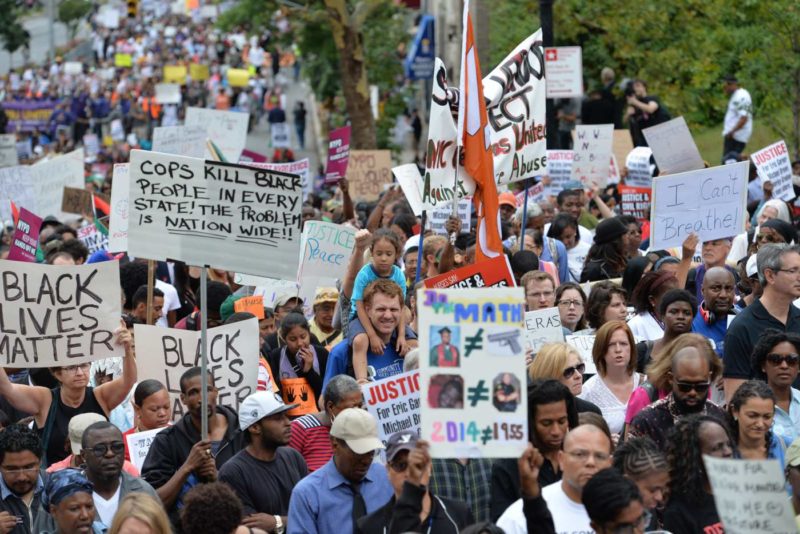
To view the entire series of Rising Up for Justice! posts, insert “rising up” in the search bar above.
Arrison Morrison and Kat Stafford
Congress approves bill to make Juneteenth a federal holiday
By Kevin Freking, Associated Press
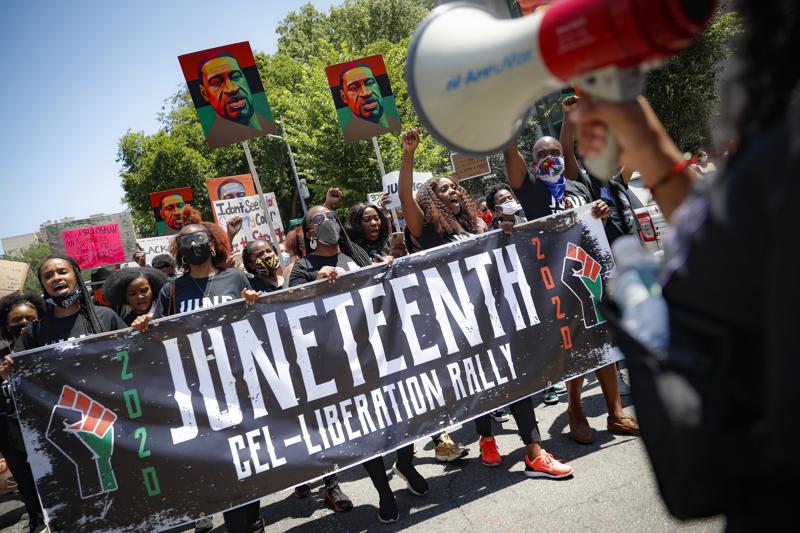
The United States will soon have a new federal holiday commemorating the end of slavery. The House voted 415-14 Wednesday to make Juneteenth, or June 19th, the 12th federal holiday. The bill now goes to President Joe Biden’s desk, and he is expected to sign it into law.
Juneteenth commemorates June 19, 1865, when Union soldiers brought the news of freedom to enslaved Black people in Galveston, Texas — two months after the Confederacy had surrendered. That was also about 2 1/2 years after the Emancipation Proclamation freed slaves in the Southern states.
It’s the first new federal holiday since Martin Luther King Jr. Day was created in 1983.
“Our federal holidays are purposely few in number and recognize the most important milestones,” said Rep. Carolyn Maloney, D-N.Y. “I cannot think of a more important milestone to commemorate than the end of slavery in the United States.”
The Senate passed the bill a day earlier under a unanimous consent agreement that expedites the process for considering legislation. It takes just one senator’s objection to block such agreements…
Some Republican lawmakers opposed the effort. Rep. Matt Rosendale, R-Mont., said creating the federal holiday was an effort to celebrate “identity politics.”
“Since I believe in treating everyone equally, regardless of race, and that we should be focused on what unites us rather than our differences, I will vote no,” he said in a press release…
The vast majority of states recognize Juneteenth as a holiday or have an official observance of the day, and most states hold celebrations. Juneteenth is a paid holiday for state employees in Texas, New York, Virginia and Washington.
Under the legislation, the federal holiday would be known as Juneteenth National Independence Day…
The 14 House Republicans who voted against the bill were Andy Biggs of Arizona, Mo Brooks of Alabama, Andrew Clyde of Georgia, Scott DesJarlais of Tennessee, Paul Gosar of Arizona, Ronny Jackson of Texas, Doug LaMalfa of California, Thomas Massie of Kentucky, Tom McClintock of California, Ralph Norman of South Carolina, Mike Rogers of Alabama, Rosendale of Montana, Chip Roy of Texas and Tom Tiffany of Wisconsin.
Read the full article here.
More Breaking News here.
Explore the ABHM galleries here.
Comments Are Welcome
Note: We moderate submissions in order to create a space for meaningful dialogue, a space where museum visitors – adults and youth –– can exchange informed, thoughtful, and relevant comments that add value to our exhibits.
Racial slurs, personal attacks, obscenity, profanity, and SHOUTING do not meet the above standard. Such comments are posted in the exhibit Hateful Speech. Commercial promotions, impersonations, and incoherent comments likewise fail to meet our goals, so will not be posted. Submissions longer than 120 words will be shortened.
See our full Comments Policy here.