Special News Series: Rising Up For Justice! – Black Lives Matter movement sparks ‘collective awakening’ on marijuana policies
Share
Explore Our Galleries









Breaking News!
Today's news and culture by Black and other reporters in the Black and mainstream media.
Ways to Support ABHM?
Introduction To This Series:
This post is one installment in an ongoing news series: a “living history” of the current national and international uprising for justice.
Today’s movement descends directly from the many earlier civil rights struggles against repeated injustices and race-based violence, including the killing of unarmed Black people. The posts in this series serve as a timeline of the uprising that began on May 26, 2020, the day after a Minneapolis police officer killed an unarmed Black man, George Floyd, by kneeling on his neck. The viral video of Floyd’s torturous suffocation brought unprecedented national awareness to the ongoing demand to truly make Black Lives Matter in this country.
The posts in this series focus on stories of the particular killings that have spurred the current uprising and on the protests taking place around the USA and across the globe. Sadly, thousands of people have lost their lives to systemic racial, gender, sexuality, judicial, and economic injustice. The few whose names are listed here represent the countless others lost before and since. Likewise, we can report but a few of the countless demonstrations for justice now taking place in our major cities, small towns, and suburbs.
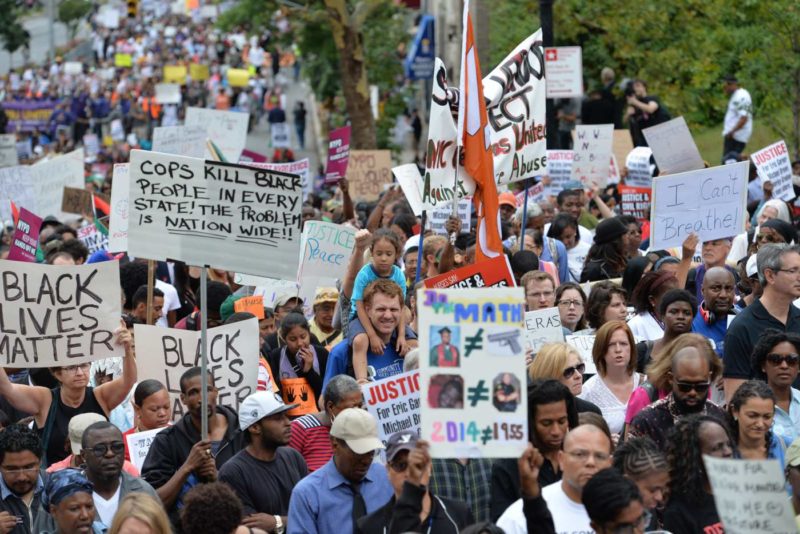
To view the entire series of Rising Up for Justice! posts, insert “rising up” in the search bar above.
Black Lives Matter movement sparks ‘collective awakening’ on marijuana policies
As racial justice protests swept the nation in June and July, some states and cities changed their cannabis regulations.
By Adam Gabbat, Politico
August 16, 2020
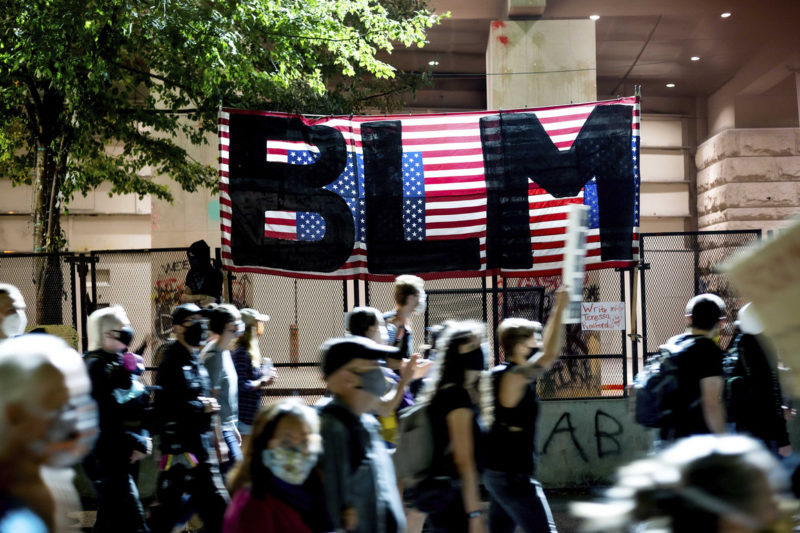
States and cities across the country have overhauled their marijuana policies in recent months, propelled by the Black Lives Matter protests over racial inequality and police brutality.
Since protests began in early June, many states and municipalities have adopted new cannabis regulations. Nashville, Tenn., stopped prosecuting minor marijuana possession cases. Portland, Ore., redirected all cannabis tax revenue away from the Portland Police Bureau. Colorado’s Legislature passed a long-stalled proposal to address social equity and scrap old marijuana convictions, and Sonoma County, Calif., and New York state expanded their programs to erase cannabis criminal records.
Black Americans have been disproportionately affected by marijuana enforcement for decades and are four times more likely to be arrested than white people despite similar usage rates, according to the ACLU. Lawmakers and advocates say the racial justice protests that began after George Floyd, Breonna Taylor and others were killed have persuaded wavering elected officials to support drug policy changes, motivated prosecutors to take long-awaited action and opened the door for new conversations about marijuana policy reform.
In October, Democratic Sens. Sharif Street and Daylin Leach introduced a bill to legalize marijuana in Pennsylvania. Street said that at the outset, only about three Democratic lawmakers supported the bill publicly. The legalization billprobably won’t pass this session, but after racial protests began in Pennsylvania, support among his Democratic colleagues grew exponentially. In July, 15 of Pennsylvania’s 21 Democratic senators, including Street, signed a letter urging passage of the bill.
“The fact is, that it was after all of this — these social protests — that we had massive amounts of Democratic members decide now is the time they’re prepared to sign on to a letter” calling for legalization, Street said….
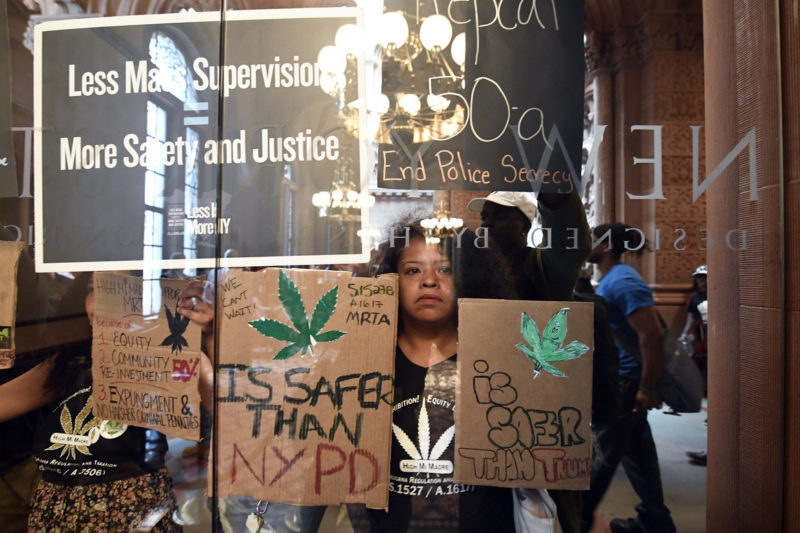
AP Photo/Hans Pennink
On Capitol Hill, it isn’t clear that racial justice protests have affected the motivation to pass marijuana policy reform. While many of the issue’s most prominent advocates have been silent on federal legalization in the last two months, House leaders are now considering a vote on the MORE Act — which would remove cannabis from the Controlled Substances Act and expunge some records — sometime this fall.
“The conversation around drug criminalization has changed a lot, and I do believe that people are now looking at it with a racial justice lens,” said Rep. Alexandria Ocasio-Cortez (D-N.Y.). While marijuana reform will not end police brutality on its own, Ocasio-Cortez said, marijuana enforcement is often used as a pretense for police violence — and lawmakers can easily look at the issue from both directions. “There are these two areas that are in tension with one another,” she said.
Read the full article here.
Comments Are Welcome
Note: We moderate submissions in order to create a space for meaningful dialogue, a space where museum visitors – adults and youth –– can exchange informed, thoughtful, and relevant comments that add value to our exhibits.
Racial slurs, personal attacks, obscenity, profanity, and SHOUTING do not meet the above standard. Such comments are posted in the exhibit Hateful Speech. Commercial promotions, impersonations, and incoherent comments likewise fail to meet our goals, so will not be posted. Submissions longer than 120 words will be shortened.
See our full Comments Policy here.