Special News Series: Rising Up For Justice! – Black Lives Matter movement nominated for Nobel peace prize
Share
Explore Our Galleries









Breaking News!
Today's news and culture by Black and other reporters in the Black and mainstream media.
Ways to Support ABHM?
Introduction To This Series:
This post is one installment in an ongoing news series: a “living history” of the current national and international uprising for justice.
Today’s movement descends directly from the many earlier civil rights struggles against repeated injustices and race-based violence, including the killing of unarmed Black people. The posts in this series serve as a timeline of the uprising that began on May 26, 2020, the day after a Minneapolis police officer killed an unarmed Black man, George Floyd, by kneeling on his neck. The viral video of Floyd’s torturous suffocation brought unprecedented national awareness to the ongoing demand to truly make Black Lives Matter in this country.
The posts in this series focus on stories of the particular killings that have spurred the current uprising and on the protests taking place around the USA and across the globe. Sadly, thousands of people have lost their lives to systemic racial, gender, sexuality, judicial, and economic injustice. The few whose names are listed here represent the countless others lost before and since. Likewise, we can report but a few of the countless demonstrations for justice now taking place in our major cities, small towns, and suburbs.
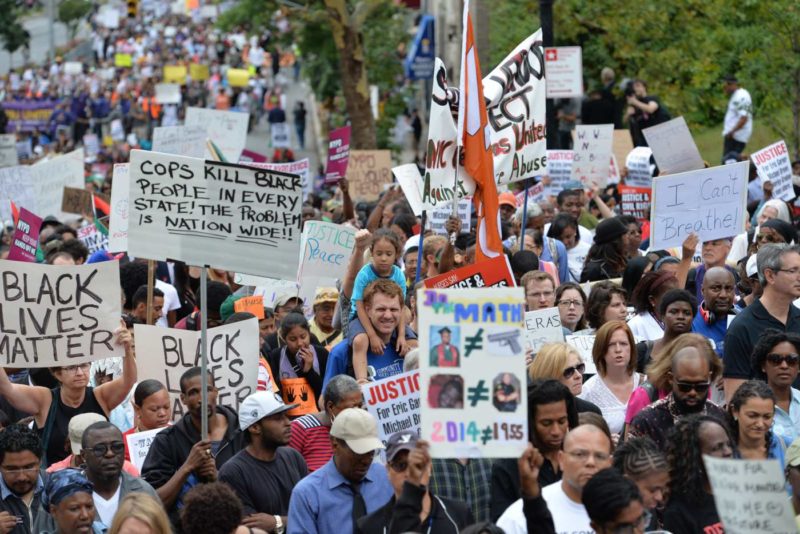
To view the entire series of Rising Up for Justice! posts, insert “rising up” in the search bar above.
Black Lives Matter movement nominated for Nobel peace prize
Norwegian MP cites global impact of BLM in raising awareness and consciousness of racial injustice
By Martin Belam, The Guardian
January 29, 2021
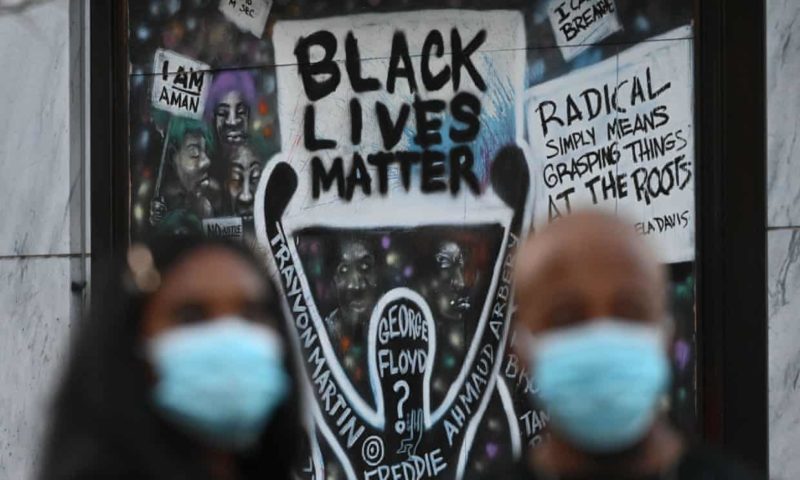
The Black Lives Matter movement has been nominated for the 2021 Nobel peace prize for the way it calls for systemic change has spread around the world.
In his nomination papers, the Norwegian MP Petter Eide said the movement had forced countries outside the US to grapple with racism within their own societies.
“I find that one of the key challenges we have seen in America, but also in Europe and Asia, is the kind of increasing conflict based on inequality,” Eide said. “Black Lives Matter has become a very important worldwide movement to fight racial injustice.
“They have had a tremendous achievement in raising global awareness and consciousness about racial injustice.”
Eide…said one other thing that impressed him about the Black Lives Matter movement was the way “they have been able to mobilise people from all groups of society, not just African-Americans, not just oppressed people, it has been a broad movement, in a way which has been different from their predecessors.”
The Black Lives Matter movement was co-founded in 2013 by Alicia Garza, Patrisse Cullors and Opal Tometi in response to the acquittal in the US of the man who shot Trayvon Martin. It gained wider recognition in 2014 following protests over the deaths of Michael Brown and Eric Garner, and was the wellspring of a series of global protests in 2020 following the deaths of George Floyd and Breonna Taylor….
“There is actually a tradition for doing this,” Eide said. “It’s a strong linkage between antiracism movements and peace, and a recognition that without this kind of justice, there will be no peace and stability in the society.”
His written nomination concludes: “Awarding the peace prize to Black Lives Matter, as the strongest global force against racial injustice, will send a powerful message that peace is founded on equality, solidarity and human rights, and that all countries must respect those basic principles.”
Read the full article here.
More Breaking News here.
Explore the ABHM history galleries here.
Comments Are Welcome
Note: We moderate submissions in order to create a space for meaningful dialogue, a space where museum visitors – adults and youth –– can exchange informed, thoughtful, and relevant comments that add value to our exhibits.
Racial slurs, personal attacks, obscenity, profanity, and SHOUTING do not meet the above standard. Such comments are posted in the exhibit Hateful Speech. Commercial promotions, impersonations, and incoherent comments likewise fail to meet our goals, so will not be posted. Submissions longer than 120 words will be shortened.
See our full Comments Policy here.