Sinners, the South, and the Price of Playing the Blues
Share
Explore Our Galleries









Breaking News!
Today's news and culture by Black and other reporters in the Black and mainstream media.
Ways to Support ABHM?
By Aalliyah Wright, Scalawag
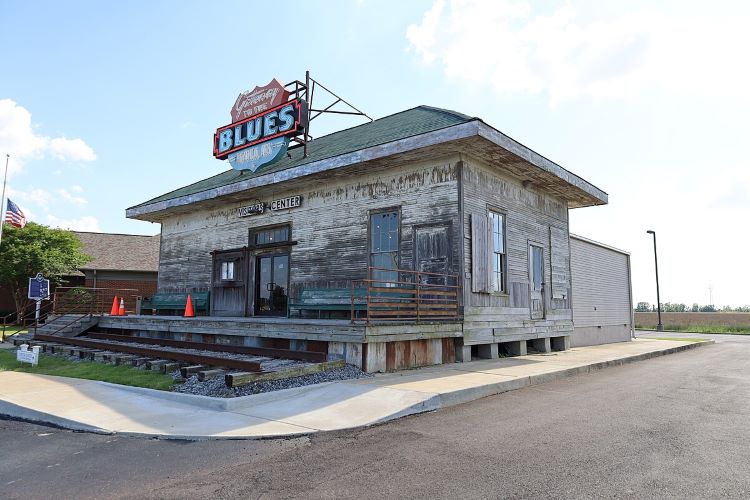
The blues runs deep through Orlando Paden’s veins.
As a child, he danced for nickels and quarters by the jukebox. He cleaned, crushed cans, and bagged them. He’d greet Mr. Bill, the bouncer, at the front door of his father’s juke joint, and watch patrons play pool and arcade games. Folks broke beer bottles, fought, and argued.
But, the music and good vibes kept them coming back.
He recalls the stories of his great-grandmama selling fish sandwiches and his great-granddaddy drinking moonshine and playing cards at their juke house behind their shack. On both sides of the family, his relatives all owned juke joints in the Mississippi Delta. Paden says his dad often told stories about his time as a “runner” in charge of distributing liquor and moonshine.
Paden’s childhood experiences come to life in Ryan Coogler’s Sinners, a supernatural horror film set in Clarksdale, Mississippi, during the 1930s when Black folks still worked the cotton fields. The movie — which was filmed in Louisiana — follows Smoke and Stack, twin brothers played by Michael B. Jordan, who moved from Chicago back South to open Club Juke. While the movie celebrates the complexities of Black life through juke joints, it also fixates on how the oppressive forces — the Ku Klux Klan and vampires — work to snatch away their freedom and stake claim to something they did not create: the blues.
Clarksdale, about 78 miles south of Memphis, Tennessee, is known as the birthplace of the blues and home to the Crossroads. As the legend goes: bluesman Robert Johnson “sold his soul” to the devil at the crossroads of Route 49 and Highway 61 in exchange for supernatural talent in the 1930s.
The juke, or jook, is where the Delta blues music thrived, though its origins can be traced back to Africa.
These spaces, particularly in rural areas, allowed Black folks to leave the plantations to drink, rejoice, and dance to live blues music.
Learn how locals interact with music in the Mississippi Delta today.
The Black community had to make its own spaces during the Jim Crow era.
Comments Are Welcome
Note: We moderate submissions in order to create a space for meaningful dialogue, a space where museum visitors – adults and youth –– can exchange informed, thoughtful, and relevant comments that add value to our exhibits.
Racial slurs, personal attacks, obscenity, profanity, and SHOUTING do not meet the above standard. Such comments are posted in the exhibit Hateful Speech. Commercial promotions, impersonations, and incoherent comments likewise fail to meet our goals, so will not be posted. Submissions longer than 120 words will be shortened.
See our full Comments Policy here.